
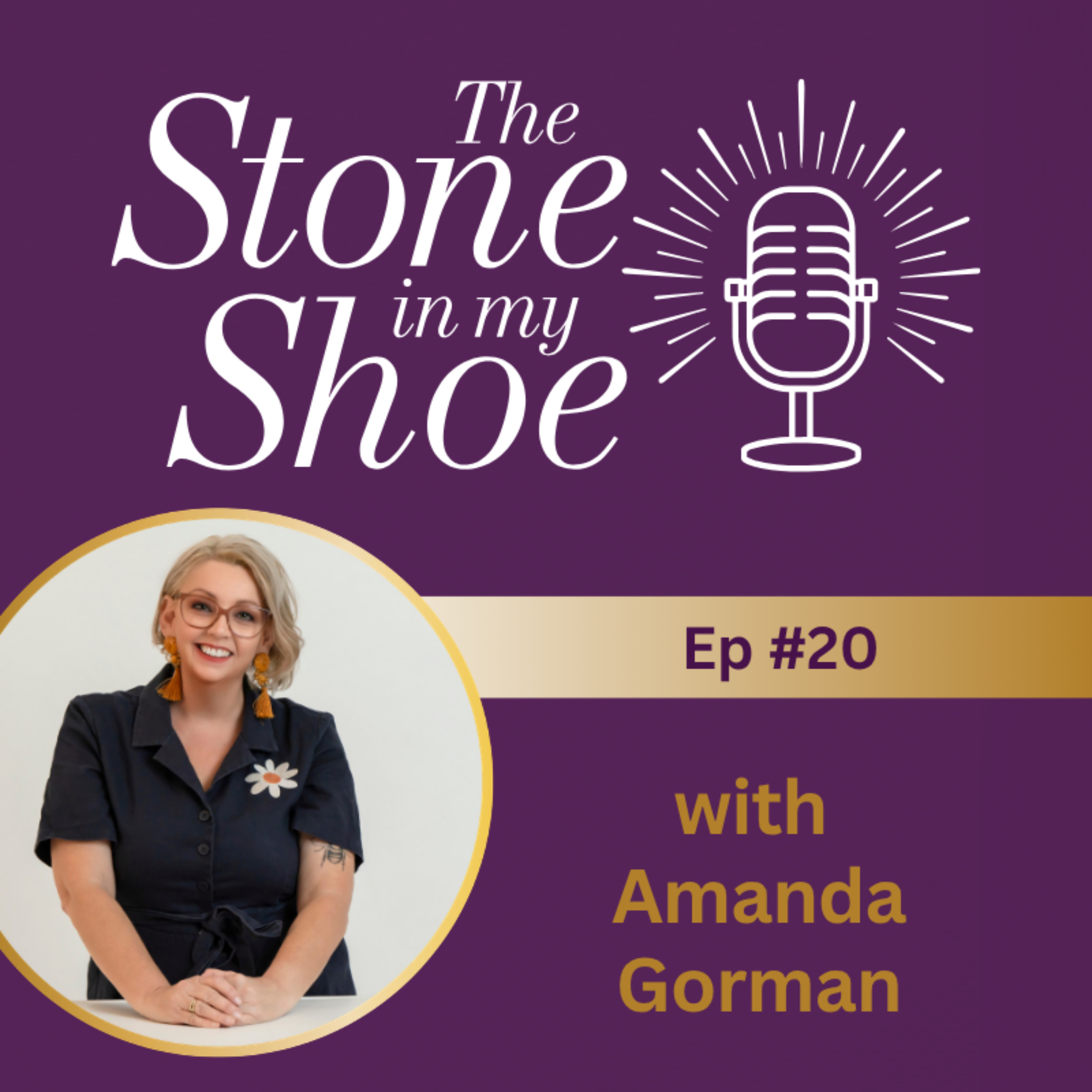
The Podcast · 1 July 2026 · 50 min
I Thought I Was the Problem | Amanda Gorman on ADHD, Self-Blame & Learning to See Yourself Differently
Listen to this episode
Chapters: tap one to jump to it
What happens when you've spent your entire life believing you're the problem?
In this deeply honest conversation, Debbie Thompson sits down with Amanda Gorman, artist, ADHD advocate, TEDx speaker, founder of Distractd, and mother of two, to explore the emotional reality of living for decades without understanding why life felt harder than it seemed for everyone else.
Amanda shares her experience of juggling work, parenting, caregiving, grief, and the relentless pressure to keep everything together while quietly blaming herself for struggles she couldn't explain.
What begins as a conversation about ADHD becomes something much deeper.
It's a conversation about identity.
About the stories we create about ourselves.
About carrying invisible burdens.
And about the freedom that comes when understanding replaces self-judgment.
Together, Debbie and Amanda explore:
- The emotional impact of receiving an ADHD diagnosis later in life
- The hidden cost of masking and high-functioning coping strategies
- Grief, burnout, and what happens when life becomes too heavy to carry alone
- Why many women grow up believing they're "too much" or "not enough"
- The difference between a character flaw and a neurological difference
- Learning self-compassion after years of self-criticism
- Why understanding yourself changes everything
- The powerful question: "What do I need?"
This episode is for women who have spent years doing everything for everyone else while quietly questioning themselves.
For women navigating life transitions, identity shifts, emotional exhaustion, people-pleasing, or the feeling that something doesn't quite fit anymore.
Most of all, it's for the woman who has carried a story about herself for a very long time and is beginning to wonder if that story is actually true.
Sometimes healing doesn't begin with fixing yourself.
Sometimes it begins with seeing yourself differently.
Read the full transcript
I had to go to an event, so I was trying to still do my job and go to functions and things. And I walked into this room, and I was already running late, so the ADHDs there didn't know about it. I sort of fly in kind of sideways, running late into this room. And it's all these people I know, but it was also a room of like just it was, I had projections all on the wall, it's a very arty event. And I think the projection sort of hit my eyes like the light got me, and it kind of disarmed me, I guess. Like all of a sudden, but in a panicky way, I had what people I guess had when people have panic attacks and things regularly, I had that inside of like, wow, people do this all the time. I'd never, because I live normally so happy. I walked in there, and honestly it was like a tiger was chasing me or it was under fire.
Like instantly lost my breath, I was like the most terrified feeling I've ever felt in my life. And my friend, oh sorry, a lady walked past me and there were only functions with the champagne on the tray. She walked past and it's like that snapped it out of me, and I just grugged that, and I saw my friend, and she just sort of waved at me, and I was like beeline to her, and I just never said anything. But I'd gotten out of it in that moment, I was very lucky. But I shit myself at that. I was like, what if that happens when I'm driving with my kids in the car? Hi, I'm Debbie Thompson, and this is A Stone in My Shoe, the podcast where we explore how
midlife can become the most true purposeful and fulfilling chapter yet when we listen to what's really there. And today's guest is Amanda Gorman, a Gold Coast artist, TEDx speaker, mother of two teenagers and founder of Distracted. She was diagnosed with ADHD in adulthood after years of burnout, grief and feeling like she was constantly falling short. Amanda now helps thousands of people better understand ADHD through education, advocacy and lived experience. And today we're going to talk about the emotional side of ADHD and the impact of late diagnosis and what happens when years of masking and pushing through finally catch
up with you. Welcome, Amanda. Hello. Thank you for having me. Oh, it's a pleasure. It's so lovely to have you. I met you at Distracted when I was trying to find out more about ADHD as well, having been diagnosed and two of my children as well. So it's something we're very familiar with in our family. That must have been a couple of years ago now too, when we just met. Yes. Yes. So I just love the work that you're doing and how you're supporting the Gold Coast community, Gold Coast for anyone listening from overseas is in Australia and Amanda set up this extraordinary container where people can come together once a month and she brings experts in to talk about it and have people's questions answered and people feel supported and
understood and that there are some strategies they can use. Yeah, it's great. You're doing great work. It's a good old community. Yeah, it's beautiful. So before we begin our conversation on the stone in your shift, I just want to ground this for the woman listening. So as she hears your story today, what do you hope she begins to see or understand about herself? I would hope from this that people will start to look within and start to analyse why is this happening or what's happening. Why am I doing this thing or why did that happen and how can I look to improve?
Yeah, a lot of the time we're looking out at what's happening around us and just get like being on a roller coaster, but I think sometimes if you can stop and just have a look at what do I need? I think that if someone can just think that after this and start looking and taking, not abandoning anyone else, but just having a look at what I need, I think that would be a really big thing for people. Yeah, and I think exactly what I was going to say is middle-aged women in particular, when we are everything for everybody else and stopping and actually what do I need is something that many of us find difficult. So that's beautiful permission to do that. You ladies, you have permission to do that.
OK, so just so we can get to know you a little bit more, Amanda, where are you in this season of your life and what matters most to you? So I feel like I'm in a great season of the life. It's always changing. So I've got two older kids now. They're still at home in high school, so they're not like having flown the nest or anything. So I feel like I'm in the thick of all of that side of it. But they're they're not little kids anymore. So I'm not having to be full on doing hair and trying to get braids done before you run out the door. It's not that. It the older side of things. But still, we're not driving cars or anything yet. So it's a cool base. I know that we've got a whole new thing coming. So the house and the family front's really still very like a nice family
unit where I feel like I've got everyone here and work wise, very busy doing ADHD of me. Lots of different projects being I have where lots of hats being an artist. And I also teach artwork like workshops after school. And yeah, all my distracted stuff. So I've been very busy there. And what was the thing you said about what was the last part? What matters most to you in the season of your life? It's I've done recently or in the last sort of couple of years, I've reflected on some of the value and strengths and all those sorts of things have been diving into that stuff. And the things that I value the most
that are most important to me are all of those things that. I guess it's not something that people would always do first off. So it's stuff like your health and your family and authenticity was one of the things that I valued the most. The things like that are really important to me. And I think probably why that is is because I've. Had so many different things go on, like with parents passing away and things like that. I think health and family becomes so much more important. Whereas when you're younger, it might be exploring and travel and money and climbing corporate ladders or something like that. Whereas for me, I feel like it's really come back to the basic stuff, like the stuff you can't really you can't take anything with you when you go. So it's health and family would be the most important thing.
That's beautiful. And you did mention authenticity. So just that look like for you in the season of your life. I think just like I was saying a bit before, showing up as yourself, but then honouring yourself because I've grown up as a chronic people, please are. And so that meant still being authentic. I think that's something that people have always said with me that they've been drawn to because I do keep it real. I'm not being fake. I'll just tell you how I feel. But I would always put myself on the line for everybody else as well. So I think in two ways, authenticity for me, probably three ways. There's the fact of me being authentic and making sure that I'm always being honest and keeping it real.
But then there's always two. I think this is an ADHD thing also. It's like, yeah, I have almost a bullshit filter. I just cannot deal with if I can sniff it out straight away if someone is not authentic. And it's one of those things that I really try and align myself with the same sort of people that aren't going to be, you know, for whatever reason, they're telling me that they're not. So, yeah, that counts is that's beautiful. And to know who you are, give yourself space, do the inward work, what do I need? Being really aware of the people pleasing and because I think once you're away, you go, oh, there are whilst people pleasing again. Next time I'm going to do this. So that awareness is so important. And then the second thing is the the bullshit thing
and align yourself with people. So you're not unraveling people who are toxic because they don't come into your life. You don't allow them in, which is good. Yeah, I always try and just keep that at a distance. Yeah, no, no, thank you. Thank you for telling us a little bit more about you. And so let's go into the stone in your shoe and what you're going to talk about today. And if you had to name it, what would you call it? And just tell us a little bit more about the stone and then we'll delve into it. OK, such a bit of a bit of a journey of the stone. It's and that's what the stone probably is. It's just this niggling thing. So for the beginning, it would be trying to do everything.
It would be trying to be like wearing all of the hats and then just trying to hold it together. It would be that's the big that's the beginning of it, I would say. And then from what it's ended up being, it's right into the end of the ADHD diagnosis as well. Beautiful. So it took us through, you know, from when this build up of trying to do everything, trying to keep it all together. Started. It was at school, perhaps teenagers, very often with middle-aged ladies. It happens in menopause that everything falls apart. So just talk us through your journey and then how the diagnosis happened. OK, so the first part of it was I was working full time and my husband was working away and my kids were quite little.
They were, I think, Jake was in grade or he was just starting school, so prep, so that five. And my father had passed away a couple of years before and my mum was living by self-hoc in Brisbane. And mum started to show signs of getting dementia, which is in our family through her mother's and her sister had it. And I was just a little bit in denial. I just kept thinking she'll be right. And my brother-in-law was going up there each week because he worked around the corner and he'd stay. And I felt we felt like she's all good. And eventually that just he said to us girls, you're going to have to come up here if you can choose just starting to. It's not till you go and see and you're there that you can see
because she was very good at covering stuff up. So then we'd start to realize, oh, she's not making her bed. She's sleeping on top of it because she's she's not eating or whatever it might be. And I just because I'm such a positive thinker, I always try and see the good and see the positive side of things. I just was like, she'll be right. We'll keep her with just it's all good. And we were just holding on that we would go up. My sister and I were like tag teaming it with God every day, making sure that washing is being done, that she's getting out, that she was eating and all of that because she was she was seemed. It was the very beginning of it. And my sister just seemed to get the idea of it in her head earlier than me. And she just said to me one day, Mum's got dementia. Love, we really need to start planning stuff.
And I just was like, not ready for that. I just wasn't ready to hear that. And that was that conversation was this. It was just one conversation, but I hung up the phone and I burst into tears. And I just it was that one thing that it's like it sunk in all of a sudden. And I'd been doing all the things before that. But then all of a sudden my brain just started to be constantly. I was constantly sad and constantly choking back tears. And I had a really good GP at the time. And she just started scheduling me in every Thursday. And I would sit there and she was so used to knowing me as this positive person.
And I started just being really like, this isn't fair. Life's not fair. The world's awful. And she was like, this isn't new. And she kept saying things like the world is beautiful, Amanda. And I was like, how can it be? How can this be? And I was so like like the how unjust it was that mum had lived this life. And now she has dementia because she didn't necessarily have the best marriage and things like that. But my mum to me is like an angel. Like she was just such a beautiful woman. And I just felt so for her sake, beaten down by that. And the tears started and they just didn't stop. Like I would I still kept working. I was just doing everything still, but I would just I could suck it up
and go into a meeting and be on and then I'd get back to the car and I'll burst into tears and I'd just drive, not even sobbing. Just crying like just tears. And I can't say what I was crying about. I was just crying and I am a cryer in the sense of I cry with like happiness. Like I get overwhelmed with a happy emotion. I'm the kind of person that'll go to a festival or a concert. I love music and I'll walk in and I'll hear the sound hit me. And my first feeling is excitement and then I'll flood with tears. And my family will look at me and go, well, I'm crying. And I'm like, oh, it's just so beautiful. But it wasn't that it was just sorrow. So I did that and it was eight months.
My doctor chugged me through this whole, let's just talk about it each week, get you through. And she kept saying really hard truth to me about you can't keep driving to Brisbane every day or every other day and doing that. And then trying to keep your full-time job, trying to get the kids at school. You just can't. And I remember being like really desperately asking her like, what's going to happen? You keep saying, I can't keep doing this. I'm going to something bad is going to happen. What's going to happen? And she was dancing around like she didn't really say, look, you'll end up in hospital or like I was on my knees like I can't stop it. So what I don't know what will happen? And she was, you just can't keep doing it. And eventually, I guess they all came crashing down those plates
spinning in the air in the sense of I had to go to an event. So I was trying to still do my job and go to functions and things. And I walked into this room and I was already running late. So the ADHD is there. You didn't know about it. I fly in sideways running late into this room. And it's all these people I know, but it was all also a room of like just it was they had projections all on the wall. It's very arty event. And I think the projection hit my eyes like the light got me and it disarmed me. Like all of a sudden, but in a panicky way, I had. Well, people when people have panic attacks and things regularly, I had that inside of, wow, people do this all the time. I'd never because I live normally so happy. I walked in there and honestly, it was like a tiger was chasing me
or it was under fire, instantly lost my breath. I was like the most terrified feeling I've ever felt in my life. And my friend, oh, sorry, a lady walked past and only functions with the champagne on the tray. She walked past and that snapped it out of me and I just grabbed that. And I saw my friend and she just waved at me and I was like beeline to her. And I just never said anything, but I'd gotten out of it in that moment. I was very lucky, but I shit myself at that. I was like, what if that happens when I'm driving with my kids in the car? What if that happens? I was I think being I'm also very in control all of the time, I've always been one of those people that you're not going to see me alone, drunk at a party,
dancing on the table and rip my clothes off. I'm just very, you know, I could be fun, but I'm not I'm in control. So that for me was terrifying. Yeah, I can imagine because it's like I no longer have control of my mind and my body. It has a life of its own and there are you go outside to an event and this screens have taken over. I am at the edge of the cliff. And if I don't do something now, I'm going to fall off. Feeling is what I'm getting from you. Yeah, I felt like on my knees with just crippling. If I don't do something, I felt like I'd already been limping it along. My husband and I all had this kind of like he was working away a lot. I'm not away. He was working long hours in Britain.
So I was like a home doing all the stuff, too. But then we had this thing going on where I used to be able to ring him and say, I'm on my way home now and he would be maybe at home. And I'd be like, I can't stop crying. I've just left mum. I can't stop. I'm going to come home. Just I'm going to usher past you and go straight in the shower and try and sort this out because we didn't want they were trying to shield it from the kids. And we had this real like thing going on. We were trying to just limp it along. And then I felt like we as much as how hard it was, we had a bit of a structure going of like, I can suck it up for meetings. And I can just limp it past the kids into the shower. Like, oh, God ahead, I'm going to bed early. There was we were able to do it.
And that was the first time that it came crashing down and I couldn't stop it. And yes, it didn't last long. But I was like, well, this isn't good. And then another thing happened the same week where I started to actually tear up in a meeting with clients. So would you. So what did you do then? You realized that actually something needed to change and that this the way you're trying to hold it together in this grief was making it really difficult for you to carry on. To functioning in life. So what happened next? So when that happened, I just booked straight in to see my doctor. We're talking her anyway on the third stage, but I was like, I have to come in and she was so good.
She'd always look at a double appointment and I'd be like, there's people waiting outside. She'd just go, no, push the tissues across. Let's talk about it. And she said to me, you're experiencing like grief now for your mum. You're going through grief while you're watching someone like it's because it was progressing. Mum dementia progressed quite fast. So this period of time is the crying and then getting to this is about eight months. So mum was really progressing badly. And she said to me, you're in you're having to go and see someone every day that you're grieving and they're right in front of you. And that's really hard. And then along the way, there'd been all these other things happen like pets dying and auntie who was also my mum passing away.
There was about seven different things in the end that happened really quickly. And she said to me, she put a name on it as, oh gosh, adjustment disorder. She called it. So she said, there's people that suffer with depression and anxiety and things their whole life. And they always battling these sorts of things. And then there's people that have something that don't suffer normally, but then something significant happens and maybe a series of events happen and call them stresses, I think. And all of a sudden you have your body's not adjusting to this. You're just not dealing and it comes crashing down. So she was like, this is serious. This is this could have you in hospital. And you could be this is like a real risk factor here
for people that want to take their own lives and they just cannot cope anymore. And I did feel at one stage there. There was a few days there where I said to my husband and I don't think I would have ever gone and done that. But I felt like it would have just been better for everybody. And it's so awful to hear that. I used to think this because it's so not true that it would be better for my husband not to have to limp this girl home every day who's trying to shield from the kids, the parents to have the kids to have a better parents. Just honestly, at one point there for a couple of days was like, I just want to go to sleep. I don't want to wake up. I really just, if I could have just said,
okay, let's just sort it out now. I probably would have, but talking to the doctor about it, she was like, that's normal. It's okay, you see it feeling that. I think people that are going to probably go and do that have had that for a long time and they'll be planning in the background, which I wasn't doing that. But I hit this point where I right now for this next three days kind of thing. I was like, that's the option. I just sounded like the best thing. So thank goodness you had somebody with you on this journey who knew you so well, who was supporting you and also making that what you were feeling was part of this grieving process and that there wasn't something wrong or broken with you that you were just in the process of something and that you would get through. It was just a matter of processing that grief.
Were you diagnosed with ADHD at that point? So no. Okay, so then how did that happen? So then she said to me, I think you need to go on a, like a certain, I think it was called an antidepressant. So I went on that and then honestly, within I think a week, I just stopped crying. It was like a tap. And it was from that we started to, once I started to feel better and I could handle things more, we started to delve into me and what makes me happy and things like that. And one of the things that I love, I'm an artist, it was like drawing and getting down and really it's hyper-focused, which I realized now, but I didn't know that at the time, but hyper-focused in ADHD is that ability
to be able to sit at a task for hours on end and just, you don't even notice the time going by. And that's the skill that I'll get into, like when I'm drawing. So that was the thing that was happening. And then the catalyst to make me actually find out about the ADHD was my daughter. So she was in school and doing really well. And then all of a sudden, she started to get her marks for dropping and the teacher said to me, she's having trouble focusing. And we started to just, I just started to Google and look into things. No one said anything. I was in the camp if I thought ADHD was the naughty boys that grew out of it. I thought they're little boys.
I thought they grew out of it. And I thought they were like climbing on the roof and rocking on their chairs, to be honest. I was that. And I had no idea there was another kind of it. I had no idea. And so we started looking into it and I was looking at, my kids are pretty close in age, they're 20 months apart. And the littler one was starting to pass the older one on all of the executive functioning stuff, like all of the organization and the planning and all of that stuff. And I just thought, oh, it could be boys, girls. I just, nothing had really dropped like it hadn't clicked. And I Googled something one day and I can't remember what it was or what side it was, but I read it and I thought, that is my daughter. Still didn't think that's me, not at all.
And I pretty much email this lovely doctor I have, give her the lowdown, I'm coming in and I'm gonna bring her in and we're gonna talk about this. So I thought, I didn't wanna just lump it on her, I wanted to kind of have her with a bit of an idea of what we were gonna talk about. And so then when I went in, we were talking about it all and discussing it with my daughter. And my doctor, she's known me, the same doctor I was just talking about. So casually said, it's like a hereditary thing. It's so genetic, it's in families. You know you have it, right? She's, you've got it. And I was like, what? She said, I've never mentioned it to you before because you're so high functioning, Amanda. And it's not been really something that we've had to discuss. But she said, I just must have thought
that you had a diagnosis in the past but it's just not, like she said, you were so ADHD. Like it's just, it was like a given. And I was like, what are you saying to me? Cause I hadn't even thought about it for me at all. And I think it's so common. Cause how old are you now? Sorry if you don't mind me asking. So I'm turning 50 this year. Turning 50. When you possibly would have been in your girls are diagnosed later than boys. So they're not at the, when they first start school. It's often in their teens, right? Even if we were diagnosed back then or had signs of it, we're so good at masking. We're so good at, it's a very different ADHD as you said, climbing the wall, rocking on the chair. Oh, so do I. The inattentive type.
And oh, she's just a dreamer. Oh, look, she's just away with the fairies. That's often what we said. Yeah. And you found ways, strategies are probably coping, working twice as hard as everyone else just to live a normal life. And that became normal. And it became normal for many of us. I think a lot of people at this in the last 10 years have gone, what? I had ADHD. I didn't know that. So, yeah. Yeah. And that's the thing with me. It's like, I can look back. And this is part of it too. Because like you were saying before, there's the hormone side of things when people hit perimenopause. We've had doctors that come and talk it distracted and they'll say, there's people that turn up to the GP clinic and they are so looking like they have ADHD. It's like textbook looking of it.
But when they delve and that's their job then to go, hang on, let's dive to the bottom of this. When they go and dive into it, this stuff's only been happening recently for them. And that's when they go, okay, this is perimenopause and they'll start adjusting things. But it's for me, when you look back, I can tell you so many stories from when I was four, three, five, whatever, all the way. That is, you can now with that lens go, oh, wow, that is so ADHD. And you might pick it up nowadays, but it has to have been there all that time too. And yeah, it's like this puzzle of the pieces of the puzzles go together. But I never really realized that any puzzle piece was missing to be fair.
But now once I know when I look at it through the lens of doing that with ADHD, it's like it is all coming together now. So the ADHD diagnosis with your dealing with the grief of what was happening to your mum and being on the SSRIs, or the antidepressants, how did the knowledge of you having ADHD and suddenly going, gosh, that makes sense. How did that work together with everything that was happening to you? And what was the outcome of that? So the best thing I could have ever done is get an ADHD diagnosis. I didn't know I needed it. I didn't know I had it. I didn't know anything about it. But I didn't realize how cruel
I was being to myself all along. Like, how, why can't you? You're just itzy. You're just, you can't remember stuff. You, all of the things. I honestly walked around thinking I was just the dumb girl that I had lots of nice quality and I was kind and friendly and nice. But that, and I actually put the academic smart side of things aside because that's not your, you're the artsy one. And I tried to just forget about that that might be important to me. You made that conclusion about yourself when you were a child, that you're just not smart, not capable or was there capable in there? You just had these beautiful qualities.
I'm just trying to think about the wounds. No, I think I was capable, Debbie. I didn't. I remember as a teenager or even getting older, thinking, I don't know if I'll be able to have a child one day because I'll probably kill it by accident. I actually used to think that I might just be that person that goes home from the shops and thinks, oh, shit, where's my child? And I've done that, by the way. And they were fine. That's right. Gosh, that's a big conclusion to come to yourself. And with the evidence as well because you were undiagnosed ADHD, going into a classroom and being expected to do the executive tasks and staying on track with things that really didn't interest you,
you almost set up for failure. So it's constantly a affirmation of your, I'm not good enough. I'm not worthy. I'm not capable. That's a big burden to carry your whole life. And so this diagnosis, tell me how that kind of, you said it was the best thing that happened to you. How did that kind of liberate you or set you free or maybe allow you to look at these beliefs that you made about yourself and go, that's just not true. It did exactly that. And I've often heard from other people from having the destructive events and things. So many people tell me they experienced like a period of grief where they were really sad about the life that they led and the life they could have led. But I have to be honest, I never felt that.
I just had this feeling of kindness to myself, like this understanding of that's okay, because part of me too, I remember things like as a child, it wasn't always like an academic thing, but it'll be this emotional thing because I really do feel stuff, like on this most deep level and from a small child. And like I said before, like the injustices of things and all of that unspoken, this is the way the world is and this is just how it is. And we know and tells anybody anything, but we all are in on the same camp and we just do this because whatever it might be. And I would be calling bullshit as a small child on, but hang on, how come this happens?
And mom and dad would be like, oh gosh, and then I would be so upset about things like emotionally sad, grew up absolutely loving animals. I love animals still to this day, I love them so much. But then I'd wanna watch like the wildlife documentary and it'd be all the nice one where they're, they've got new babies and things like that, beautiful. Next one, it'll be like the hunt. And I would be absolutely devastated that why didn't they stop that? I'd say to dad, why? There's cameras, it's clear someone could have seen that was happening and stopped it. And dad would try and explain that this is educating people and it's so you get to know and it's the way of the world and you do the circle of life and all of that. And I would carry that for the poor little impaler
or whatever it might be for, have to go to sleep just getting so upset that it happened. And I'd hear my parents saying, oh, she's just so emotional. She's so emotional. I used to think that was bad. Yeah, and it's carrying those big emotions when you are doing it and no one else is and you're like, what's wrong with me? Why am I? Did you ever at any point go, there must be something in me that's broken that's just not working properly, that I am so emotional or did the... I used to, no, I didn't think anything was broken. I knew I was different. I've always known I was different, but I used to see it in a sunshiny kind of way because I was always a bit much too because I'm a chatterbox. And so it'd always be happy and chatty, but it was always like, okay, Shush now please
that the parents are talking or whoever. As an adult now, I do have to commend my family for I can't really remember them ever being harsh on me with be quiet and whereas as a parent, you do not have an ADHD daughter who talks a lot to me sometimes. And it's fine. I love that. I love how much she talks, but then there's times when you do just want everyone to leave you be. And you've got, I think parents have to juggle that there's this rejection you feel too if someone says something like don't talk to me right now. And I never felt that side of it as a kid, but I did feel different in the sense of I knew I was bubbly. I knew people used to, kids like people would,
they say you go in a room, you light up a room. I knew I did that. I knew I had that. And I think I leaned into that because then I became a bit of in our family, a bit of the entertainer, like a bit of the joker because that's better. And I think a lot of ADHD kids do that than focusing on your timetable that I just let it get. Yeah, absolutely. And it's interesting the emotional side of ADHD because a lot of people never talked about that. It was more the executive function and the behavior side that was very much the way boys presented whereas girls are very different and the emotional, can you just talk a little bit more about that for somebody who might not be diagnosed
and how the emotions overwhelm you. And also, I guess, a little bit about masking and trying to fit in. And as a result, you lose your, no, that's too many things for an ADHD person. Let's stop right there. Let's have a good question at the side. You and I are. Yeah, because it's just me. These five things I need to know. No, let's just do the emotional side and having their diagnosis of ADHD, how that helped you to accept yourself. It really did in that sense of looking back and going, that's where it was, that's where it was, that's where it was. It gave me permission to understand that it's not this moral failing. Because you can't see it,
it's so easy to do it to yourself. I'm a victim of that myself. I like turning it in and being in the critic and I'm cruel to my own self of why did everybody else get the memo? How come everyone else isn't at the soccer fields at seven o'clock in the morning at Paradise Point when I've got all of our family, including grandparent, out of bed in the winter, in the rain, a Paradise Point, half an hour drive away for the soccer game that, oh, no one's here. And I would beat myself up over that. And now there's an element of no, this is what I struggle with. And everybody has to be everyone's problem, but I've started to go, can someone else check the app?
Because it shouldn't land, as a mom, everything lands on you generally for that stuff because that's just the role I was doing. And I was doing it badly, but then in the same talking about emotion, in the same vein, if my husband dare said anything like, well, if you checked the app, oh, then I'd be so wounded because it's so sensitive as well because you're trying, I feel like you're trying so hard all the time. And if everyone could just see the little things that you've had to do just to get to that and then it goes wrong, it's like you just feel like the world comes crashing down and no one cares about the fact
that this happened and that happened and you've overcome. Because I feel like we're really good at fixing stuff and problem solving, but no one cares. And I listened to something or I read something years ago about a woman talking about her son having ADHD. And this kid had, he was an older kid, like 20 something, and he had to go overseas to be like a best man in a wedding. And he had to do all of that stuff to everybody that's just neuro-typical. It's, yeah, whatever, we all do this. But thinking of it in our brains, like coordinating getting your bag packed, remembering your passport, all that stuff, then getting to the airport on time, checking in, now you've got all these people and noise and lights and all of the stuff, getting to the boarding gate on time because now you've checked in
and you're a bit relaxed and all of that, like all those things, getting off the plane, getting to your hotel, doing the things. He got there and he had done all this stuff and he forgot his suit trousers. And it's not the end of the world, you can get the trousers quickly somewhere. But that's the reality of it. It's like you feel like all the things that everyone just takes as like a breeze, it's a walk in the park. It's so taxing, it's hard to do. And then if just the smallest thing goes wrong like that, not the smallest thing, but something goes wrong. How much you beat yourself up is so much and then it just takes with the emotional stuff. It just takes someone to show any sort of disappointment
or that you've done something wrong and all of a sudden you just feel so bad. And for me, it doesn't stop, knowing I have it doesn't stop that sometimes, but it gives me a lens of, hang on a second. It's like I've got a cheerleader that's putting me on the back going, wait a second everyone. She's got ADHD, this is hard for her. Whereas before I just would have been like, oh yeah, I'm a failure. Yeah, and also with the education that you're doing which is so brilliant, not only are you educating the person themselves so that they, as you said earlier, it's not a moral failing, it is how your brain works. And also what you said earlier is that you walk into a room and you light up your room and that is your special skill amongst various other things.
The fact that you can't get somewhere on time or that you can't get to the soccer match, it's also asking other people to help. You know what, I'm not very good at this and it almost reminds me of the duck on the water where everything's gliding, but underwater they are working so hard. And they don't see, as you said, if you've got a neurotypical brain, you can't see that the effort involved for stuff that you just take for granted is, can be depending on what it is, two to 10 fold the effort that you're putting in. It's exhausting. And I think in the work that you're doing so that the family members can understand and be compassionate as well so that the disappointment is not there, but most importantly that the person involved, depending on how their ADHD presents,
because everybody's different, they can have compassion for themselves and kindness for themselves. Because when I think that's such an important part because in your lens changes, and you're not flawed, you're not good enough, you're not worth all the things that you take, I've got ADHD, but I've got amazing superpowers. I can do these and these things. And I think that's the other thing too, like I've been recently over the last few years looking at that values system, but then looking at the strength you have because we all have strengths as well. And that's part of it. And I think even just like in schools and everywhere, like this whole, like teachers and people
that everyone's trained to go, let's evaluate Debbie, let's evaluate Amanda, what's she struggling with? What do we need to fix? What can we help her with? And there's not really much attention going on. What's Debbie really good at? Or what's Amanda really good at? And then you identifying yourself and knowing, I'm good at this, so how can I lean into that better? So I've been looking at that sort of stuff and it's things like, I'm really curious. I like to find out stuff and I love connecting people. I didn't realize how much I love. I've always been a bit of that in the friendship group when we were younger, before we had kids. It was always at our house, a party or, and it's just like I love being the glue that connects people. And I don't mean to do that,
but then when I think about it, I think about distracted, for instance, I started that because I found out I had ADHD and then I said, where can I go meet people? Cause I actually, at this stage, I didn't know anyone with ADHD. And I thought, there's going to be people like me and then we're going to be able to just chat chat and be all like sparkly and happy and find all the talk about rainbows. Cause we joke in my family, cause I'm all my husband thinks that rainbows lollipops and, cause that's me. I just, everyone else can be a bit doom and gloom about stuff and then I'm all, and he jokes that I'd meet someone like, he says, I'm meet Ivan Malat. And he says, you and Ivan Malat, like you would probably, he wouldn't kill you. He'd like you. You'd probably say, he could probably talk to you about,
oh, and you'd come home and you said, I met this man, Ivan, and he's a really nice man. And he said, and he probably would be a nice man to you. For those of you who are listening from another country, I'm Malat was a serial killer. A terrible serial killer. And yeah, I hear you cause I'm also, I'm Oran Wanda. I'm called Oran Wanda in my family. Yeah, Amanda, if you could go back and speak to the younger version of yourself, what misunderstanding would you most want to free her from? I think it would be that it's just okay to be you, to be, to keep, I don't think I tried to change too much, but I think it would be maybe letting me know
that you're not dumb, that your brain works differently, that this environment for you isn't set up for you, that lean into what you love. Like I loved books and things like that. Like the book back in the day for me was like the iPad these days. Like lean into that stuff that you're loving and yes, you need to know your time tables and yes, you need to know whatever this is, but remembering that this structure you're in right now once you're older, you won't have to be doing this. And I almost remember telling myself stuff like that when I was little because I was terrified of speaking in front of people. I was terrified of doing those class presentations you'd have to do.
And sometimes they'd start it with the letter, first letter of the alphabet, Amanda. We'll just start with that, go through Amanda, you're up first. And once I ever got into a moment and did it, I was fine, I actually did really good on those kind of grade because I am chatty and I think I could wing it a bit more because I am chatty. But I used to be so scared of those things and I used to tell myself when you're older and no one has to tell you what to do anymore, you can just choose not to do it. And you can make choices because I used to feel like and this would be all kids everywhere. You're just doing stuff all the time that you don't wanna do that you have to do. And I always say to my own kids now, just do it scared, just do it, get in.
You've gotta do the thing, just do it, do it scared and then just get it done because there are things you have to do like that. But I would tell my younger self, just yeah, this isn't forever, you're not dumb, you've got an amazing brain. That's beautiful, it's your cheerleader who was always there but probably got drowned out in the midst of life and everything, everything else. And by the sounds of it, you've got a whole, you've got a whole troupe of cheerleaders or whatever you call lots of cheerleaders. Also, yeah, no Amanda, you're amazing, so do it. And I think what you said there is curiosity because curiosity is one of my core things and the other thing is courage. I love curiosity, courage and creativity are my kind of core pillars of how I,
yeah, because courage is essential in things. If you're just speaking to the woman who's listening to you today and maybe she's feeling exhausted and carrying all these emotions she can't explain, what would you leave her with today? I would say to lean into it, like I'm a big believer in sitting in the feelings of things and I know we don't always have time to do that but if someone's feeling lots of things and they don't know how to explain it and they're not sure of what's happening, I really like to think about why that's happening rather than just fixing it with pain, for instance,
not just putting that painkillers strain on it, it doesn't exist anymore, it's gonna come back. So that's how I feel with emotions and things. So I feel like if people can just take the time to go, why am I here and feel it, feel like then you can just move on through it to the next stage and grow, hopefully, from that. And the thing too, and if you put as lens of that with ADHD in the sense of sometimes things happen where you're overwhelmed or you're excitable or you blow up about something because it's all been happening and this is like kids in school that are kicking off, it's always about this, why did that happen in the behavior and naughty or whatever it might be
and everyone's feeling so bad about their behavior or how they're feeling. But no one's thinking beforehand, how did I get here? And I think that's important. If you're feeling something, like whatever you do to think about it, however you're gonna drill in and find that out, whether it's writing it down, me, it's like talking, it's like I process stuff so well from listening and talking things through to even taking voice notes, stuff like that but just so you can, it's like on the hop, my brain will start to go, if I start talking it out loud, it'll connect, hang on this and then all of a sudden, it's not that you've solved the problem, it's just that you know where it's coming from and it's not just this, I feel like this, it's always you've got to be curious and find out why.
Yeah, yeah. Now, and I love that the fact that everybody has a different way of processing it and some people write diaries, some people talk to themselves, some people talk to other people, some people talk to a therapist, whatever it is because the saying goes, whatever you resist persists, you can't squash these emotions down, they are stoning your shoe, they're telling you something and the sooner we listen to them and no such thing as a good or a bad emotion, we are full of emotions. So feeling angry, you can't feel angry, it's a bad emotion, let's flip that and go, I'm feeling angry, why am I feeling angry? And once you explore that without judgment and with compassion and curiosity and courage, I think that's when we can really listen to ourselves and really try and understand ourselves.
Yeah, I agree. Yeah, Amanda, thank you so much for your time today. Thank you so much for sharing this light on ADHD and how it shows up in women and your story of grief and how it came out and even though you've got this personality of rainbows and unicorns and whatever, there comes a time when the stone gets so sharp that you have to do something about it before you but you fall off the edge of a cliff. So is there anything else you want to leave us with before we finish? I guess just to be your best version of yourself, just to always honor yourself, I think is at our age, it's about that you're being everything for everyone and you can still be everything for everyone,
but what's that saying you can't pour from an empty cup? Is that the one? That it's that you need to be making sure you're taking care of yourself too. So it's that and that's a battle. All of us, that's a battle, but it might be the smallest thing like I love with potty, just a potty. It doesn't have to be facials and massages and drips away, that'd be nice. But just tiny little moments for yourself just to come back to you. Beautiful. Amanda, thank you so much for your time and really appreciate your story, something that I really resonate with, but as you finish listening today, just notice what stayed with you. Maybe there was a part that felt familiar or maybe there was something that was quietly uncomfortable and take the time
because that's usually where something true is sitting. Thanks for listening.
Want to know what your Stone could be?
Take the free reflectionKeep listening
 Self-worth: why you feel like you don't matter | Teresa McLellan23 October 2026
 Choosing Yourself Over Belonging | Ramona Kossowan on Identity, People Pleasing & Finding Yourself6 August 2026
 Living Your Dream but Still Seeking Approval | Nyasha Ngwena on Identity, Self-Worth & Trusting Yourself9 July 2026