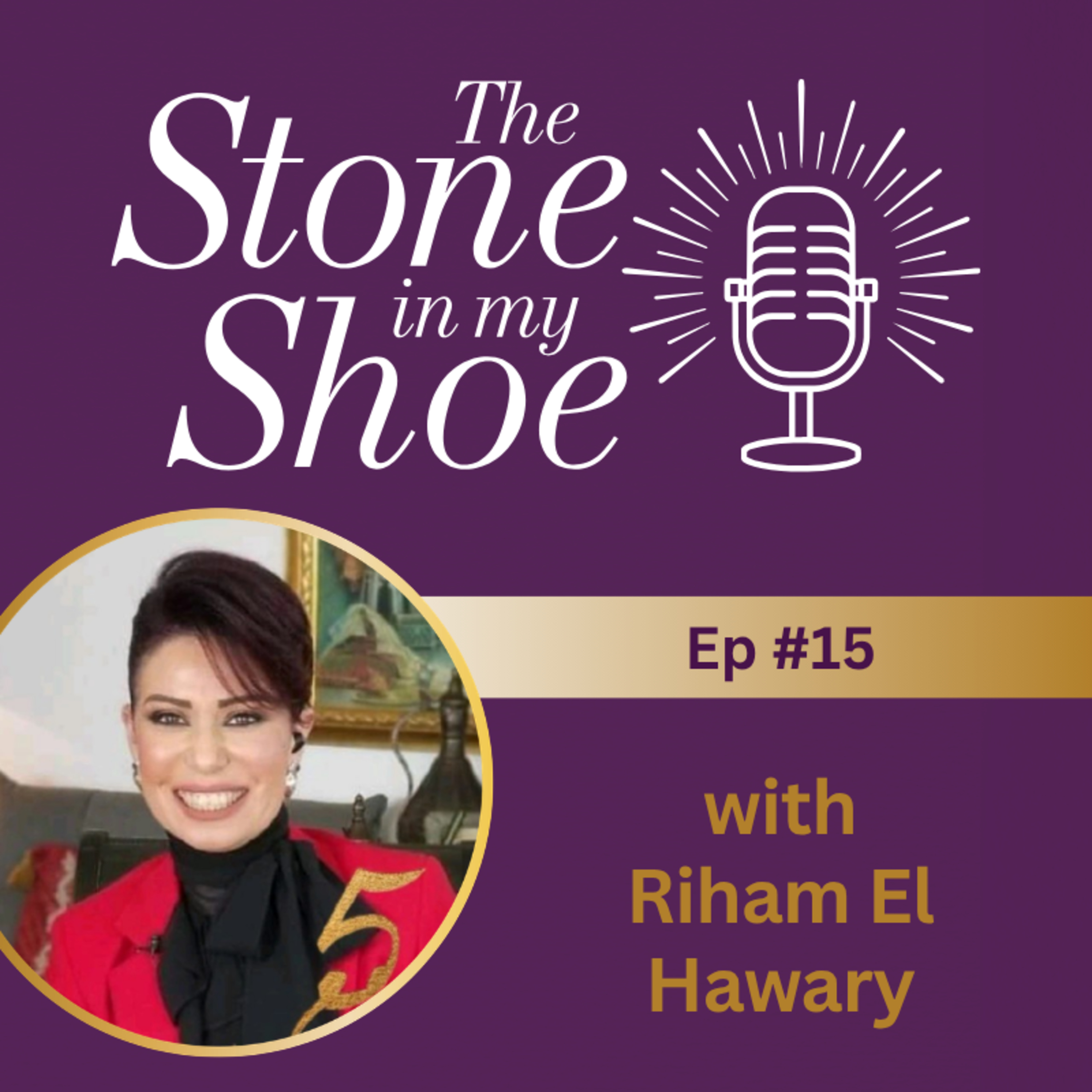

The Podcast · 16 July 2026 · 40 min
When Success Becomes Your Identity | Faith Paki on Self-Belief, Letting Go & Finding Yourself Again
Listen to this episode
Chapters: tap one to jump to it
What happens to your identity when it becomes attached to what you do, and the life you've worked so hard to build no longer feels like yours?
You will hear how a woman can build a successful life while quietly losing herself.
You will hear why self-belief is built through the small promises we keep to ourselves, not through extraordinary moments.
You will hear the question that left Faith speechless: "What do you do?"
From the outside, Faith Paki's life looked successful. She was leading teams, travelling the world and helping others grow, but underneath it all was a growing sense that she had become defined by what she did rather than who she was. Everything changed when one simple question left her speechless: "What do you do?"
Together we explore how self-belief isn't built through extraordinary moments, but through the small promises we keep to ourselves every day. Faith talks about identity, purpose, intuition and letting go of perfectionism, and about learning to listen to her body and to the quiet voice that had been there all along.
Faith is a facilitator and the founder of Capacity Reset, and she now works in human potential. She is honest that there was a lonely, dark time along the way, when she says she had forgotten who she was.
What you will hear
Building a successful life while quietly losing yourself
Why identity so often becomes attached to our roles
The small daily choices that shape self-belief
Learning to trust yourself again
Letting go of perfectionism and control
Learning to listen to your body
The courage to ask, "Who am I beneath everything I do?"
Why awareness is often the first step back to yourself
This conversation is a gentle reminder that you don't need to become someone new. You may simply need to remember who you've always been.
Read the full transcript
I didn't realize how much of my identity I put on what I do, not who I am. And I had forgotten very much who I was. So it was a very lonely time. It was, I wouldn't say, no, it probably was one of my darkest moments, not in the sense of like not being able to, it disabling me, but definitely a dark moment of identity and recognition and self worth. I really had to go into the depths of asking myself questions that I never thought I would ask before. And it came off the back of going to an event. So I had left the corporate world, I've made the decision, I had left the corporate world and I went to a local event
and this beautiful lady who was exhibiting at the time all she asked me was the simple question was, what do you do? And it absolutely unnervelled me. I had no answer. I paused, I internally was freaking out and I had nothing to say. And anyone who knows me, Debbie, that's a rare occurrence to have nothing to say. I went into the car and I just cried. Hi, I'm Debbie Thompson and this is a stone in my shoe podcast where we explore how midlife can become the most true purposeful and fulfilling chapter yet when we begin to listen to what's really there.
And today I have the great pleasure of introducing Faith Paki from Sydney who is a facilitator and founder of the Capacity Reset. She's a wife and mum of four children and has over 20 years experience in leadership, facilitation and people development. And she's spent her career helping people grow, navigate and change so that they perform at their best. She's known for creating spaces where honest conversations can happen and she brings warmth and depth to her work. Today she joins us to share part of her story and the lessons that she's gathered along the way. Welcome, Faith. Wow, thank you so much, Debbie. What a lovely introduction. Oh, you deserve it and that's who you are
and that's what you've created. It is, it is a pleasure to be here. Thank you for allowing it and asking me to be a part of it. Oh, it's an absolute pleasure. So before we get going, just I want to frame this for the woman listening. As she hears your story today, what do you hope she begins to see and understand about herself? I have always been fascinated by human potential, by what happens when someone finally backs themselves and the moment that they realize that they're capable of more than they thought. So I'm hoping for anyone who watches this that they have a bit of self-relection on themselves and realize, wow, I can do hard things
and I'm able to accomplish a lot more than I'm told or that I think I can do. Beautiful. So human potential and we'll come back into that because that's a big one. Human potential and believing that we're capable of so much more because I've spoken to so many women on this podcast and there's often a part or a few parts that is just holding them down from really flying. I'm really looking forward to exploring that part with you as well. Awesome. So just so we know a little bit more about faith. Sure. Who are you in this season of your life and what is the most important thing to you? The most important thing to me is my family. That is the most important thing to me and very closely second is my self-belief
that which has very, which wasn't on the radar for a lot of my years, especially within my adult years. It's just something really recent within the last year that has been down the bottom that is absolutely in my top three. And so that's where I'm at there. What was the other question there Debbie? No, just what was the most, where are you in this season and what was the most important? I think you answered what was the most important and I guess if you had to describe where you are in this season of your life. Where am I in this season of my life? That's a really great question and it took me a little bit to find that and to be able to answer that. Where I'm at honestly today is I'm fulfilling my purpose. I find enjoyment in everything,
in absolute in everything and I haven't been able to do that before. I have confidence in myself and my ability and it's a true confidence. It's an embodied confidence rather than a performance confidence which is very different. And so that's where I'm currently at this stage of life in this current season, which is a beautiful season but it doesn't come without its turmoil or trials or things that I need to work on. That's just life. Yes, but it sounds that you've got such a beautiful foundation to work from. You've got this real confidence. So it's almost like whatever work you've done in the last year and perhaps it was before that, but we'll unpack that. Is it's built this really beautiful foundation
that is authentic and true and strong and even though things are happening because life happens, there's a steep sense of joy and trust and knowing who you are and really trusting yourself and that, gosh, that's powerful. It really is. It is one of the most powerful things that I inhabit and it takes work, something that I had to be very mindful of and it's something that I had to work on. I constantly have to work on it every single day. I make, it's a priority of mine. Beautiful. And that's where you are now. So let's take you back. And let's talk about the stone. So let's talk about the stone that you want to talk about today.
If you could name it, what would it be called and could you describe it? As for the stone in my shoe, now for many years, I had built what looked like a very successful life, a career from the outside. I was doing things that young, faithy would never have thought was possible. I was leading teams. I was speaking on stages. I was traveling, seeing the world. I was achieving goals that were incredibly hard, but underneath all of that was a sense that I had outgrown the identity that I had built my whole life around. And it led me to the one question that I never expected to find myself asking,
which was who am I when all these roles I've spent my whole life carrying are stripped away? Interesting, very good question. Before we answer that question, let me go back to the roles that you were playing. Sure. And how long you'd been playing them for and perhaps what was under why you were playing those roles? I know that's quite a big loaded question, but as you talk, I'm sure you will integrate all of those answers. Okay, sure. I pretty much left uni. I went straight into corporate and I excelled within corporate very quickly. Whatever organizational business that I was in, I went into leadership positions and roles quite quickly. Whether it was in the airlines, I worked for an airline for over a decade.
Just recently, I worked for a direct selling company for I'd been with them for over a decade. So I was always looking at ways that I could lead and be surrounded with leaders within the company. So it's, sorry, I forgot the question. Sorry, no, that was a lot of questions. That's my ADHD. It's like a good question. What do you think was under, you were building this part of success and achievement. As you said, stuff that in little faith would never have believed she was capable of, but she so was. But there were parts of you fueling this and making you work hard with- Oh, sure. Yeah, so what were those parts and why do you think they were there?
I think what was fueling me most was probably things that I had been told in my childhood of I've always been very athletic. I've always been good at sport and I've always been good with people. I've always had really good conversations, relationships with people. However, I think somewhat I've understood that I wasn't always smart. And so I always would overcompensate performing wise where I would use my strengths, talking to people, building relationships, helping others navigate where they're at with their success. And that's how I found my niche and found something that I was good at and comfortable with that. Even though textbook wise,
I probably wasn't as ideal or had the smarts like many other people would. And I had to find something that naturally suited me and what I was good at and I built upon that. And I think if you're able to do that, there's so much, we're told so much of how we need to fit into certain boxes or we need to, for us to be successful, there is a path or there is a pathway or there's a succession. No, there absolutely is not. And once you have that belief of finding things that work with you that you're actually really good at that literally does identify you from other people, then that's your strengths and that's what you need to capitalize on and you don't need to be good at everything
but you are definitely good at something. Oh, that's really important because so many people hang their hat on smart or not and therefore not good enough. And smarts academically is one tiny fraction of what smarts actually is. And we've been told that line, I think we're starting to realise that but what's beautiful about you is that you saw your strengths and you really capitalised on those and then you built them. So these were very powerful parts of you. Correct. And so at what point were they just not serving you or were there other parts that came in that you had all the success from the outside? People are like, wow, Fad, look what you've achieved. This is unbelievable. And the parts of you would have been said that as well
but I guess what, where did the unbalance come? Was it a moment in time or was it a slow burn? Can you just talk us through that? Yeah, that's a really good question. It was definitely moments over years. I've had, I wouldn't call them whispers. At some point there's my, it was screaming at me and there was opportunity landing in my lab. It just was, I would always put it down to timing. It was not. I found out that over the last year that I've been working through myself, it was an excuse that I use. I very much could have done this a lot earlier. That was a safety net that I put because it was safe. That's the easiest way. I was good at it. I was getting paid for it.
I was doing a percentage of what I do now as in helping other people and being able to encourage others and empower others. I was already doing that. I was traveling the world. It ticks so many boxes but it wasn't a tick box within myself. It wasn't giving me the fulfillment that I needed and that came through literally waking up one day and listening to myself and saying, that's enough. That's enough. Wow. I felt like I had been ignoring myself for too long. I'd been making excuses for too long because as I said, Debbie, this hadn't been like a woke up one morning
and this had been years of nudges, of thinking of opportunities that I passed by to stay safe. So underneath it all is to stay safe. Underneath it all was to stay safe. And what was that part of you protecting you from to keep you safe? Safe from what? I guess safe from not being successful in the eyes of other people, in my own eyes to not be needed. It was keeping me safe to be needed, to be counted on. It was keeping me safe to really not look at myself and to be vulnerable that I could back myself
and I can do hard things. I could do hard things within organizations and within different companies but it was still safe. It was still very safe and I just didn't have that belief. I really didn't have that belief yet it's something that I portrayed and I wasn't practicing what I was preaching. What I was preaching to everyone, I wasn't really practicing it well within me. I was within the organization and the role absolutely but within faith there was a disconnect. That's amazing because it's like there's so many things going your way. People almost think that you need to have a, you need to fall off a cliff for something and that doesn't have to happen but when you look back and you go,
gosh there were so many whispers, shouts, screams, slap on the face, whatever you want to call it. And yet this other part of me that were keeping me safe was no faith. You can't do that, stay safe. You've got everything. So it sounds like the safety part of you was a very strong but powerful part of you that got all the success. What was trying, which part of you was trying to say something and be heard and come up that eventually you listened to? Or parts perhaps? Oh, that's a really good question. That's a powerful question. What parts of me, I think it was you can only help people within the organizations or companies you work for but you're so much bigger than that.
You're so much your impact, your service, how you can serve other people is so much bigger than that. And once I heard that, I've heard that for a long time but once I really heard that, how can you ignore it? Because that's something that I've always been passionate about my whole life Debbie. My whole life is, I've wanted to serve in different capacities and I have done that but when you get that real astounding, you're limiting yourself, you're limiting other people. And I think it was that last part is you're not just limiting yourself, you're restricting other people's access to you.
And that is what really changed everything for me. That was the pivotal moment that I was like, it's not about me, it's never actually about me, it's about my contribution. So would you call this part of your self-belief, self-confidence? Because at the beginning I think when I said, what were the most important thing to you and you said family number one? Yes. And what did you say number two? Was it self-belief? Self-belief, yes. So maybe this was this part of you going, un-yourself-belief faith, please listen to me, you were so much bigger. Absolutely, absolutely. And it was, it's made up of years of making promises to myself, but not keeping them, right? And it's those little promises
that we make to ourselves, but we don't keep. And I'm talking simple things like, you're tired, have a nap. And I would push through old concepts, I would ignore it and I would think, no, what if this person thought of this? I'm on the clock. All these things I made up every excuse and it's those little whispers, it's those broken promises to ourselves that actually affect our self-belief. When I stopped doing that, when I was made aware of it, to be honest, I didn't know I had to learn that. But once, now I do what I want to do and I listen to myself, I listen to my body and everything else can wait. Or if I'm on a roll and I just want to keep going, I just keep going.
But it's those little moments that used throughout your life where you say you're going to do something for you and you don't do it. And those things compound. And when they compound, you really do start ignoring yourself and your self-belief isn't there because there's no trust. You can't trust yourself. Yeah, isn't that interesting? And it's not the big, it's the little things compounded over years and years. And then there you go, you tried to do that, but you see you can't. You're not somebody who follows through. And even though this is all subconscious, all of this is going on completely. And that is the thing is we don't understand it. So when you, a year ago, you went, okay, enough, enough.
I am much bigger than this. I need to back my, the part of me that's been too quiet for too long, the self-belief. Yes. So you went and backing it. What work did you do? Because you said something very important is that you had to learn it. We don't just want to wake up one day and have the skills. It's the wake up one day, going, listen to me, okay. Now, how do I nurture you? Because you probably didn't know how to nurture. It's kind of, you know. I, I was very lost. And because I didn't realize how much of my identity I put on what I do, not who I am. And I had forgotten very much who I was. So it was a very lonely time. It was, I wouldn't say, no, it probably was one of my darkest moments,
not in the sense of not being able to, it disabling me, but definitely a dark moment of identity and recognition and self-worth. I really had to go into the depths of asking myself questions that I never thought I would ask before. And it came off the back of going to an event. So I had left the corporate world. I've made a decision. I had left the corporate world. And I went to a local event and this beautiful lady, this, who was exhibiting at the time, all she asked me was a simple question was, what do you do? And it absolutely unnervaled me. I had no answer. I paused. I internally was freaking out
and I had nothing to say. And anyone who knows me, Debbie, that's a rare occurrence to have nothing to say. I go, I went into the car and I just cried. I just absolutely cried. But you often need moments like that, don't you? To go, I've actually lost myself. I need to find myself. And I can carry on pretending, but that's just going to bring more and more unhappiness and misery. I've been shown this part of me that wants to be heard. And now I have to relearn something. It's have we have different children, right? We have to learn to them all slightly differently and learn new skills. Okay, so you were at that point, you were kind of, who am I? Who am I outside of my job? And you certainly had to ask yourself some questions. Can you talk me through just a few of those questions
and perhaps some of the ones that you found the most challenging and perhaps the most rewarding in the end for giving you an answer? Yeah, good question. I think one of the hardest questions obviously was who am I without the role and title? And also even deeper within that is why the other roles that I do, the mother, the wife, why are they not enough? Why aren't they enough for me just to be full stop exclamation mark? Why do I need it to be something that I do? And yeah, why do I have to build it up into something more? Because that is enough. It absolutely is enough. And so a lot of the questions that I had within myself was what makes me happy? What brings me joy? And I have asked these questions to myself quietly
on the daily, to be honest, but it's different. It was a different depth that I've understanding. It was also one of the questions was what's the legacy? What is faith's legacy? What do I want to leave? What's faith's imprint on this world? That was the game changer. When I couldn't answer the question and that question of who am I and I kind of had to deep go within myself, then when I got to that question of what is the legacy I want to leave? Then that opened up a lot of other questions and a lot of the other questions was what was I good at? And Debbie, I just want to take a little note because when I ask that to myself, what am I good at? When you're going through a really tough time
which I'm sure you and many of your listeners have been through is you're at a stage of life where you are lost. Your confidence is not very high at all. So when I'll ask myself what am I good at? I cried and I couldn't think. I had burnt toast that morning. I wasn't good at anything. And so that really tripped me up. That was a very hard question. What was I good at? And it was actually my husband and my closest friends. I had the courage to ask them. And when I asked them, they just gave me everything that I needed. And I will forever be grateful for that because they gave me a really good start to my list.
And once I created that list of what I was good at, there were lots of crossovers. There were lots of crossovers of things that I was good at and that's where I found my passion. At that point, that's where I found like, huh, this is something that I'm really not only just good at, but I'm passionate about it. And then I could build my legacy building from that. I'd love to go back to the answer to those questions, but there's something else I wanted to ask you around this. Sure. Is when you're unraveling and whether it's a forced unravel or you're curious about yourself and you're unraveling, I think it's really important that you don't do this alone because we are stuck and we have parts of ourselves that will keep us stuff and the ego will keep us stuff because change is hard.
So I think a really important thing is to bring your family and your friends in and your trusted people. And also a lot of people go to mentors, whether it's a course or learning about the parts of yourself, a lot of people do meditation or Tantra or to, because it's in bodies as well. It's not just talk therapy. It's in your body. Absolutely. Absolutely. So I think that's important. So which of those, apart from talking to your friend, your friends and your husband, what other courses, strategies did you use to help you through this period? Yeah, that's a good question. So initially when I had left corporate, I actually signed up in the month of August last year, I signed up to every single free masterclass online.
I just needed to fill my time. I needed to feel busy and I went to anything on how to 10X the business I did not have. I went to hit my birthing. I went to how to be a doula. I could never be a doula. Those people are angels on earth, but I went to everything, how to be a better communicator. And I think it was that in itself taught me a lot. It was just like, why are you trying to fill the time? Find something that is meaningful and purposeful for you. And I started meditating. And I did do everything by myself for six months. I didn't ask the question to my girlfriends until January, 2026. So I did all of this by myself and it was a very lonely experience. I do not recommend it. I'm so grateful that you bought this up
because it is so important. And it could very have, it could have easily spiraled very quickly. If I, at any point, I'll be honest with you, it could have been a lot worse and taken a lot longer. So I didn't ask that question until January. I did a lot of meditation. I did, which I was never good at. Now I love it. So if you're not good at taking time, and I'm not talking music and humming and all that, if you like, that's what I do. But also just taking time. I sat with myself a lot. I had nothing on and I would just sit there and eyes closed, sometimes eyes open and I would just sit there and try to listen to my thoughts,
to what I was feeling, to my hunger pains if I was hungry, I would just sit there and I would just listen. And I can tell you, Debbie, I've never done that in my life. I've never because a busy woman or a busy life is a successful life, right? Absolutely. And also it's interesting what you said, I wasn't good at meditation. And that's what's so many, it's the good in the bad. I'm good at this. I'm not good at this. I'm not gonna do it. And what is good at meditation really mean? Because meditation could be when you cook at night and you just go into that flow or when you're painting or when you're just walking in nature or when you're sitting there having a cup of tea, watching a bee on a flower. It doesn't have to be this. And I didn't realize that, Debbie. I didn't realize that it didn't have to be,
boom, it could be literally sitting in my car in extra five minutes after I've dropped off my children. And I think that realization in itself, I'm like, I can do this anywhere. I can be at a concert and I had done this recently where there has been, I've been at a sports field and I just took a moment and it just went internal and I just, it was great. It's a skill. It's something I had to learn. And it doesn't have to be perfect. And I think, for the perfectionist out there and like me included, when I first started, it had to be quiet. I have to have 20 minutes. It had to be without me having anything to do. What the hell? When is that ever gonna happen? So I myself up for failure, right? Correct. If you do it in everyday moments,
you setting yourself up for success. And it's one thing you said earlier as well, it's the small repetition one way or the other. So the small ignoring spirals you down and the small little steps that you take to back yourself all compound. It's not a, whoa, it's the little things. Yeah. It's the little things. I love the way that you braid that. Yes, exactly right. Yeah. And I think that's particularly the high achievers out there. It is okay to not do anything and just to listen. In fact, it is not okay. It is really important and it can be done slowly. The other thing I want to ask you is you said you, your legacy, because I'm something you really, I could say you really, it was very passionate about. But before I ask you that,
what else, what were the top things that you saw about yourself? And you went, ah, I've been living by that for all my life. I need to let those go with love. Oh, perfectionism is a big one. Needing to organize everything. Control. It's even just saying that it tastes like vinegar, but control was always something that I needed to have. And somewhat, it's not a bad thing, but there are limitations, right? It's been able to see what, it's been able to have the capacity to see when you need to be and when you need to take charge
and when you can sit back and allow others to lead. It's that recognition, definitely that. And I think the last one is self-belief. I keep coming back to that because without that, there will be no movement. And hope, I just got you because those would be my top four as well. And I wonder if the self-belief is also the core and you're doing the perfectionism and the controlling and the driving and the achieving because you don't feel good enough. And so the not good enough is driving those ones and the self-belief is hanging off on that I'm not good enough. I've never felt not good enough.
I think I've had some really impactful and great mentors that have been able to articulate and literally speak to me about what I can and can't do that I could never see in myself. So I had those, whether it was coaches young when I was playing sport or even mentors in business, it was, I think it was more just the need to prove it to take up space, the need to be involved and be a part of the conversation. Whether I needed to or not, in my mind, I needed to. I needed to and that was just part of my thinking. So interesting, isn't it? How we're such complex beings with so many different parts
of the self, so many different needs, so many different stories that we carry, ancestral stories, cultural stories, stories our teachers and it's being able to unravel that. So the next question is legacy. Sure. What answer did you get there? I think with the legacy is it's not really a straight path. I just feel like there is going to be an abundance of opportunity and that I will take each one as it comes and it will might be with different topics, it might be in different environments. So I really don't know what that looks like and this is the great thing. I didn't know I'd be sitting here a year later doing this with you. You just don't know, Debbie, you know what it's like
but you've got to just take the step. You've got to keep working towards what you think is coming up and then it just unravels and the opportunity is coming, the blessings coming, the abundance comes but it comes through the action. It comes from not having the clarity, it comes from having the confidence or having the self-belief to take the steps forward and that is something that I live with day in and day out that I understand that I teach with such grit and such emotion because I've experienced it. There's been times in my life where everything's been great but there's been no motion in my behalf and with that, there's no movement. Good or bad, there's no succeeding, there's no moving forward, it's just stale
and you might be happy with just having a day in, day out type life where everything's the same old. I'm not, I am not happy with that. That doesn't give me any fulfillment. So when it comes to legacy and how I want to contribute, I don't have the answer to that. That's my honest answer. I don't know, I know what I would like but I don't have the answer and I don't even want to articulate what I would like because I don't want to put a ceiling on what that legacy would look like. I don't want to, once I hit that, be like, oh, I'm good now, carry on. Do you know what I'm hearing is so interesting is so often in corporate, we set a goal and the goal is very specific. What do they say? It needs to be timely specific. Tell us exactly when it's going to be done. Yes. How it's going to be done.
And so it lived like that for so long and you said your controller was very strong. Now what you're living in your legacy is opposite of control. It's flow and trust and faith. And it's like a backflip but that faith and that flow and taking the steps because you can't just sit there. It's having the courage to take the steps and along the way you'll be guided and you know you're going in the northeast direction but maybe you'll go a little bit this way and a little bit this way. Absolutely. And along the way you will see something so beautiful you hadn't anticipated whereas if you went marching in that direction you might not have seen all the beautiful things along the way that were part of your legacy because they embodied in you.
So I think it's learning to trust that everything is going to be okay, that you're in the right direction, that you're working on yourself and that you don't have to control stuff. Yes, that is pivotal. And it's hard, it's a hard lesson to learn. It is so hard. And how you start losing that control is by keeping the promises to yourself, right? Those little promises, those little things that you wanna do to yourself. I'm going to stop work now and I'm gonna take my dog for a walk and doing it. It's those little things. I know it sounds so simple but we ignore it. We ignore it and I'll just get this done and I'll just do this, I'll do that or we think of how other people
are going to react to some of our decisions. I think big scope. Now there is nothing good or bad. It's just lessons and living. That's it. And I really like that there's nothing good or bad because as soon as we frame it as good or bad our brain goes, I need to do more of that and it might not be your good. It might have been good that you've taken on and society's good and weak. So I think you're absolutely right and compassionate about yourself that there is no good or bad, it just is. And listening to yourself and not letting yourself down, showing you that you can trust yourself. I think that sounds amazing. And it is the little things
compounded where the magic is. There's nothing else that I can say to that. It is the little things that compounds and that's where the magic does happen. And I think once you realize that it shifts the way that you see everything in your world. Everything shifts. But you also feel liberated. The pressure immediately starts to lift, immediately starts to lift. And I think, and that's part of my legacy is if I can do that to one, two, 10, 100 people, 1,000 people, then I can leave this earth. They'd be really happy and proud of my efforts. Because yes, I aspire to be a great wife and a great mother. Yeah, of course, but there is something bigger
and more impactful for me. And now at this ripe age of 44, you're never too old and you're never too young. Absolutely, you're never too old and never too young. I just whenever that time is right, take the step. There is so much on the other side of that. That is, there's so much wisdom in that. And I love the way you've framed everything that it's not this huge, big, massive change that you have today overnight. It's lots of little steps that are totally doable if you back yourself. You have the self-belief that I can do this. And it's not huge things, it's little things. It's little things compounded. And just the trust in yourself but also giving yourself space. Because there's only one way you're gonna find out
who you really are, what really makes you take it. And those are some questions. And some are gonna take you to lonely places but get support. Don't do this on your own. And start now. Absolutely, start now. Start with the little things. And that's why I created the capacity reset framework and it's because what I went through for six months, no one has to do that alone. No one has to do that alone. And I wish I found something or someone who would be able to take me and hold my hand during that time. Because it was hard. So we will link all your socials and how to get hold of you below. So thank you so much for that. Now, just before we finish. Sure. Are there any parting words that you would like to leave with the lady listening?
Yes. For the person, I should say. For the person, sure. If something feels different in your life, pay attention to it. Not because something is wrong but because something might be changing. And we often think that we need all the answers before we make that decision. But my experiences was actually the opposite of that. The answers came after I was willing to trust what I already knew. All those little whispers, all those little things that have come my way over the years. I didn't need, I don't need a five-year plan. Even today, I don't need a five-year plan. I don't need certainty. Sometimes the next step is just simply being honest with yourself and trusting that who you're becoming is absolutely worth meeting.
That's beautiful. That's beautiful. It just takes the pressure off and it makes it sound so organic and it's already in there. You've just got to allow it to come out. It's already there. And I think that's the biggest learning, Debbie. Is so many times we're told by social media you can become someone else. You need to, it's all in there. And that they were, hey, she, they're ready. They're ready. They're ready. They're ready. Oh, that's beautiful. Thank you so much for your time and sharing your wisdom and for being so honest and authentic and really telling us about the different parts because I think it's when we have these honest conversations that somebody else listening goes, gosh, I felt like that. Gosh, that's me. I didn't know where to start. And now at least I have somewhere that I can start.
And then that's what I'm finding. Even things that I share on social media, Debbie, I get messages every single day from people going, you spoke to me. I'm going through this. I feel this. That's also part of that legacy. And that's the fulfillment that I get. I'm like, good, you're not alone. Allowing people to feel that they're a part of something else that other people are experiencing this time that they're going through. And I think as humans that's one thing that's been trying to take away from us is connection, but it's something that we need more than ever. More than ever. I totally agree. Awesome. Thank you so much. Yeah, thank you so much. So as you finish listening today, just notice what stayed with you. Perhaps there's something that felt familiar
or maybe something slightly uncomfortable because often that's what's asking for a little bit more of your attention. Thanks for listening.
Want to know what your Stone could be?
Take the free reflection