The Podcast · 31 July 2026 · 50 min
When the Life You Built No Longer Feels Like You | Audra Phelps on Identity, Intuition & Letting Go
Listen to this episode
Chapters: tap one to jump to it
Have you ever looked at your life and quietly wondered… "How did I get so far away from myself?"
In this deeply honest conversation, Audra Phelps shares how years of living within clearly defined roles slowly left her disconnected from herself. As a wife, mother and committed member of the Mormon church, she did everything she believed was expected of her—until anxiety, curiosity and unexpected life changes began asking questions she could no longer ignore.
Rather than one dramatic turning point, Audra describes a series of quiet awakenings: returning to university, discovering supportive friendships beyond her church community, moving overseas, and finding enough space to examine beliefs she had never questioned before.
This episode is for women navigating a midlife identity shift, life transitions, people-pleasing, emotional disconnection, or the quiet feeling that the life they've built no longer reflects who they truly are. It's a conversation about finding yourself again, learning to trust your inner voice, and creating a life that feels aligned with who you are today.
In this episode you'll hear about:
Living through roles that slowly eclipse your sense of self.
The connection between anxiety and unexamined expectations.
Why creating physical and emotional space can change your perspective.
Learning to trust your own inner voice.
Rebuilding identity with curiosity rather than certainty.
Every turning point begins with one honest question.
Topics Covered
Midlife identity shift
Finding yourself again
Women trusting their intuition
Identity beyond roles
Emotional disconnection
Anxiety and self-awareness
Life transitions for women
Personal transformation story
Midlife awakening
Self-discovery after 40
Building a life aligned with your values
Faith transition and identity
Every turning point begins with one honest question.
Perhaps this conversation will help you ask your own.
👤 Connect with Audra Phelps
Instagram: instagram.com/mamaaudra
Website: mamaaudra.com
LinkedIn: linkedin.com/in/audra-phelps-b422786a/
Facebook: facebook.com/profile.php?id=61571178607920
YouTube: youtube.com/@Mama-Audra
Read the full transcript
But I started suffering from really severe anxiety and depression to the point where I was having panic attacks almost every night. And hindsight, looking back, that was my body screaming at me, you've got a stone in your shoe. You have an external authority, you know, in charge of your life and you don't even know who you are. And I knew that I had given up the power over who I was, but I didn't even know the first step in finding out then who I was. And it was scary because there was a lot of big consequences that I was presented if I didn't believe, if I didn't follow.
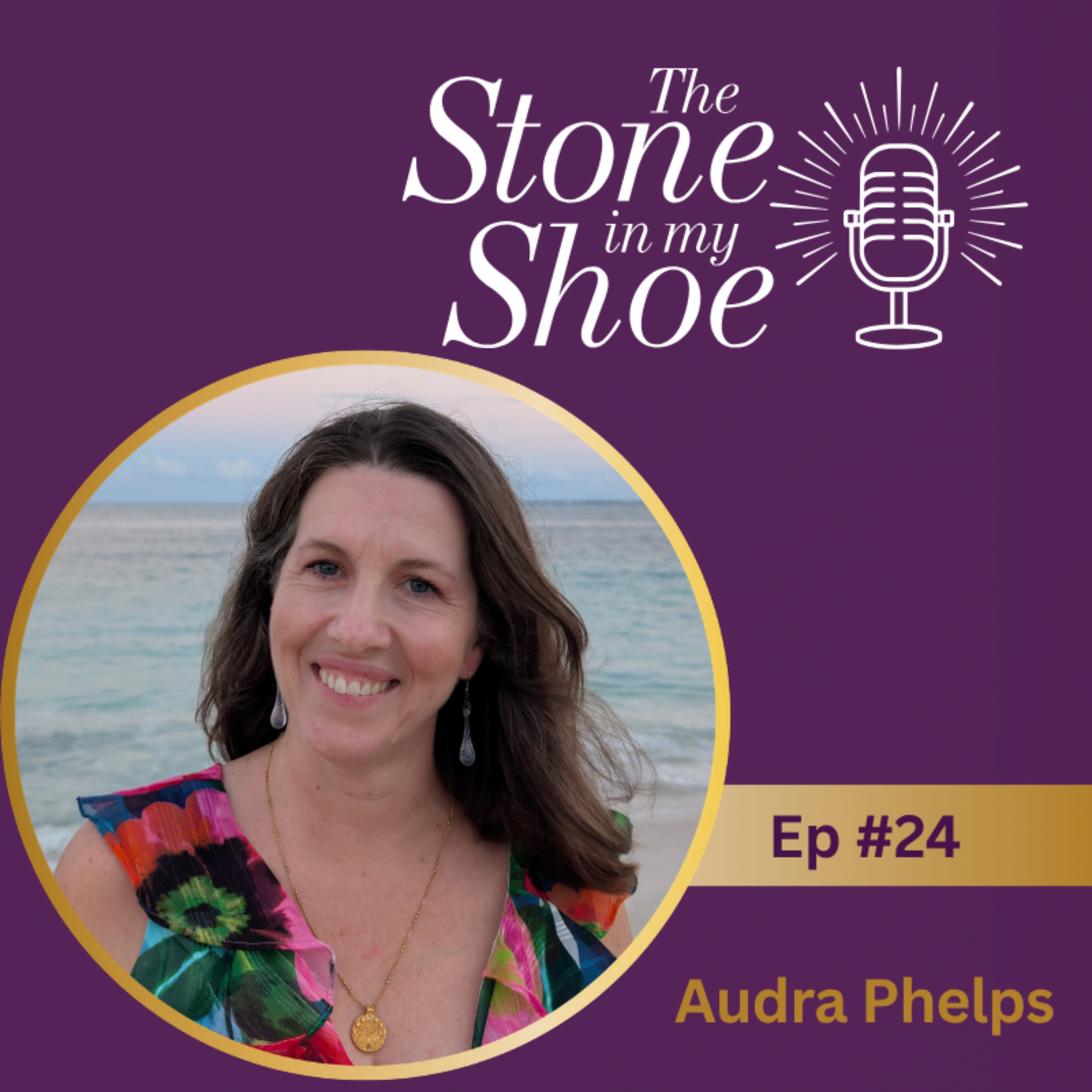
And so, but that was kind of my very first wake up call. Hi, I'm Debbie Thompson and welcome to the Stone in My Shoe podcast. Like a stone in your shoe, we all carry things that quietly shape the way we walk through life. Through honest conversations and powerful stories, we discover the wisdom that helps us understand ourselves and walk a little more freely. And today's guest is Audra Phelps. Audra is the founder of Mama Audra, where she supports women rebuilding their identity after leaving the Mormon or the Latter-day Saints Church. Drawing on her own experience, together with a background in education and coaching, she helps women navigate grief, motherhood, identity and the courage to build a life that feels true to who they are.
She's also a mum of three grown-up children. Welcome, Audra. Thank you. It's a pleasure to be here. Thanks for having me. Oh, thank you so much. And what I love about these conversations is I'm in Western Australia in a caravan, sitting on a beach. And Audra, where are you? I'm currently in Washington state in the United States. Yeah, but I was just in Timor last day, so I was a little closer to you. Yeah, a little easier time zone. But this is what's so wonderful is that we're women from all over the world and our stories are relatable wherever we live in the world. So yeah, lovely to have you. Now, before we begin, I just would love to ground this for the woman who's listening.
As she hears your story today, what do you hope she quietly begins to recognize in herself? I think that maybe that woman could start to recognize the need to turn inward and the need to start paying attention to their own inner promptings. And really listening to that because I think many of us throughout our lives have quieted our own voice in the desire to serve other people, to be a good mom, to be a good wife, to be a good woman. And we've learned to ignore ourselves. So I would say just to tune into who you are and to learn to listen to yourself again.
That's incredibly powerful. The tuning inwards and listening to our own voice because so and I know this as well is the desire to serve, the desire to be a good mom, be a good this, be a good that and comes to a place of love and wanting to serve the people you love. But then like anything, if it goes too far that way, the pendulum swings and and there are consequences. So thank you for that introduction. So before we get into your story today, I just want to find out a little bit more about you. Where are you in the season of your life and what feels the most important to you? So I'm currently in a bit of a transition phase or a reinvention, if you will.
As you said in the intro, I'm a mom of three adult children. So empty nest phase. So no kids living in my house anymore. For the past several years, I haven't had kids living in my house. And about that time when my youngest was about to leave home, it was like, I could do anything I want. What am I going to do? And at the time I was a school director in Timor last last day, actually working in an international school there. And when I really did a deep dive into my life, it was I chose the career to be a teacher, educator and then move into school administration, not really because I was listening to myself,
not because I was listening to that inner knower or that voice inside of me. But I chose it because I thought that a good mom would choose a career that wouldn't take her away from her kids and teaching. You have the same schedule as your kids. But then when I really started taking inventory of what I liked doing and my life experience, I have found a real passion for coaching. And specifically I coach women and moms who have left the Mormon church or the LDS church because it's a very unique process to go through and it can leave you feeling very ungrounded.
So I help women navigate that grief and the guilt and the loss and rediscovering who they are after they leave. Yeah, thank you for that introduction. There were a few things that really stood out because I guess going from teaching to coaching, it's not a massive leap, many of the same skills. It's the transition of you have time, what really fires me up and taking that leap. But also taking your story, because I'm sure now many years later to look into that journey that you went through, you have to almost go through and learn the lesson, see the wisdom, almost remove all the emotion from it to then be able to go in and support people.
It seems like a very logical and beautiful transition from one thing to the other. Yeah, it feels that way. It feels very natural and you're right. It's something that I honestly, I still am uncovering parts of myself from the old conditioning that I had growing up. And it's going to be a lifelong journey, but it's been 11 years now since I've left. And I have done a lot of healing work. And just like you said, I now have that emotional separation from it where I can turn around and I can look at it with peace and resolve and lessons learned. And I can help the woman who was me 11 years ago when I first left.
I couldn't have done that even just two or three years ago. It's something that really needed my own healing process to happen first. And I think that's what's so interesting with all the stories that I have with people is that it's not an overnight thing. It's a process and you take two steps forward, sometimes two steps back. And it's about being courageous to keep taking the steps, but also to be really compassionate with yourself, that this is a process that's going to take time. And then one day you go, yeah, I'm ready and I'm so excited to hear your story. Let's get into the stone. If you had to, and I know the story in the stone are all intertwined, but if you had to name the stone, what would you call it and how would you describe it?
The stone for me was the realization that I was letting an external authority make decisions for me. I'd given my power away. And what that looked like for me. When I first started to recognize it, I was born and raised in the LDS or Mormon church. And it's a very prescribed way of life. So for your listeners who don't know that much about that religion, it's more than just a belief in God and going to church on Sundays. It's your entire community. It's your social structure. It's very strict lifestyle rules. It's what you eat and drink. It's what you do almost every night of the week.
So it's an entire community and entire lifestyle. And also for women, especially, your life is determined for you. You are told from the moment you're a small child, what your purpose is and your purpose is to get married in the Mormon temple and have children, period. Is that it? There's just one purpose for women. There's nothing else. Pretty much. OK. Yeah. And so I lived that. I did everything that I was expected to do. And when there was times I would doubt or times when I would say, that doesn't make sense to me or I don't know if I want to do that. Because there were times when I said, I don't know. I think I want to work.
I think I want to have something outside of the home. I was told, no, your place is in the home. You're a nurturer. That's your divine role. You're to raise godly children. That's your place. And so I did that. I got married at age 20. I started having kids at age 22. And without really much of my own thought put into to it. That's just what everyone around me was doing. It's what the life expectation was. It was what was going to make me a good, righteous woman and a good mom and a good wife. I was just following all of that. And then so then my real wake up call was after I'd had three kids
and I was in my late twenties, my, I was stay at home mom. I was checking all the boxes. I was doing everything that the church told me would make me a good wife, a good mom that I would receive blessings for that would make me a righteous, worthy individual. But I started suffering from really severe anxiety and depression to the point where I was having panic attacks almost every night. And hindsight, looking back, that was my body screaming at me. You've got a stone in your shoe. You have an external authority in charge of your life. And you don't even know who you are.
And I knew that I had given up the power over who I was, but I didn't even know the first step in finding out then who I was. And it was scary because there was a lot of big consequences that I was presented if I didn't believe, if I didn't follow. And so that was my very first wake up call. Can I just ask you a question? So that was a really big wake up call. That was in your late twenties. Yeah. And your body literally was now screaming at you. You were having constant panic attacks, the anxiety and the depression. It's almost like your mind and your body had disassociated from one another. And I guess in some ways, and I'm not trying to put words into your mind,
but so much of your thinking had been indoctrinated from when you were very little. So your body needed to be the one to scream and say, hey, listen, because your mind perhaps had lost, as you said, you lost so much of your power. But my, I guess what I'm curious about is, did you get, looking back now, did you get signs that your body was trying to tell you something long before this, this huge event happened? Yes, absolutely, absolutely. There were so many times even as a kid, I was the one in Sunday school who was like, that doesn't make any sense. I don't know if I agree with that. And I would bring my questions up. I would bring them up in church. I would bring them up with family members.
And but the conditioning was if that your doubts are sinful. And if you're doubting that Satan's voice. And so you needed to pray more, read your scriptures more because that meant that I had an impressionable heart and I needed to make my will the Lord's will. And one of the things that I was told a lot from the time I was a small child was that the Lord works in mysterious ways. You don't have to understand how he works. You just have to obey. So obedience was how I proved worthiness. Obedience was how I showed that I was lovable.
Was by just being obedient. So you by the sounds of it, you're a curious little soul who who and just for what you've done in your life, you you've got this innate curiosity and who this is who you are. And you came out as a young child with these curious questions and it wasn't safe to be curious. It was only safe to obey. So curiosity to obedience on the two extremes, not like you had to do a small change. You had to do a whole big 180 degree leap on on who you were. So as a child being told that this curiosity was sinful and maybe you're a bad person and maybe Satan was in you like
how did that make you feel emotionally? And how did that make you feel in your body as well? Emotionally, I felt like I wasn't good enough that I couldn't. I didn't measure up to other people that other people could find favor with God faster than I could. And that I obviously was doing something wrong. Because I was constantly questioning and vulnerable to Satan's whispering. So it made me feel like something was really wrong with me. And what also what it taught me was to distrust myself. So anytime those feelings would come up, I would immediately push them back down, right? And so from a very young age, yes, I was very curious.
But my authentic self, my personality was squashed because it was an unfavored characteristic of mine to be curious and to ask questions. And so I was constantly molded to fit in as the sheep who just follows. And I tried for many years. I didn't leave the church till I was 35. But that conditioning was so deep in me that it wasn't until my body started screaming at me that I started to recognize it. But it's not like then I could just, OK, make that decision. It was 10 years before I really could say to myself,
I am not Mormon because I am. That's an identity statement. And that's the deepest part of your psyche is your identity. So even though I was slowly in those 10 years of leaving, I was slowly chipping away at these beliefs that I don't agree with that. I don't feel good with that. I couldn't quite get to the identity statement yet. That one took a long time. Yeah. It's almost like this is armor and it has to all be taken off because you had to stay safe as a young child. You had to stay safe in your circumstances and curiosity was not welcomed. You're towing the line, obedience, all those things. So this armor was just put on you. And I totally get it is that it's one step at a time.
It's all this armor taking off until you can expose your heart. And even then, as you said, is you couldn't trust your inner voice. And that's that's a huge one to to look at and then take that leap of going, I'm going to trust you and that doesn't happen overnight. So thank you so much for sharing that. What I'm intrigued about is going back to when you had the panic panic attacks and the depression. What support did you get and how did you express it? And yeah, can you just work through that part of your journey? Yeah, at first, I didn't recognize it for what it was. And I thought, OK, I knew I needed help.
So I went to my family doctor and my family doctor prescribed and to depressants, which I took and they didn't work for me. And now looking back, of course, they didn't work. It wasn't a chemical imbalance in my brain. That wasn't the problem. And so when they weren't working and I decided to go off of them, I did a couple of things I knew that I needed. I was feeling very dependent. I was dependent on my husband for finances because I was not supposed to be working and his role was to be the provider. So I was dependent on him. And I was also feeling very dependent on the church for telling me how to raise
my kids, who to be, what to believe. And I knew I needed a sense of independence. And I was coming off antidepressants at the same time. So I did two things which were which really started me down this road. One was I went back to school. And I thought, OK, I know the church told me that I shouldn't have a career. But I need something that's mine. I don't even know what I'm interested in anymore because I haven't been allowed to explore really any interest because my whole, all my energy was going to raising children. So I went back to school and I really loved science. So I thought, OK, I'll be a high school biology teacher.
And I chose teaching not because I was super passionate about being a teacher, but because in my mind, that was the most benign job a Mormon mom could have because I wouldn't have to put my kids in daycare. I would still have the same holidays as them, all of that. But going back to school really, I started to see who I was outside of the church, outside of motherhood, outside of being a wife. And then the other thing I did was I joined an exercise group because I had done a lot of research about the benefits of exercise when you're struggling with anxiety and depression. And the exercise absolutely helped because it helped to move that anxiety that was feeling stuck in my body.
But also because I had joined a group, we trained for different running races. And I wasn't a runner, but I thought I need someone, some kind of accountability, I need something. And so now I have these different friend groups. I have my friends in university who had nothing to do with the church. They weren't Mormon, and I now had my friends in this running group. And I was noticing the contrast between those relationships and my relationships in the church. And I started to see the judgment and the expectation and the pressure and that the anxiety was coming from every time I was at church
and around my friends who were at church, because then I would go to school or I would go to do it with my running group and I would feel open. Like I could talk about whatever I wanted. I wasn't worried about someone judging me and people were just curious and just genuinely wanted to get to know me. And that was something I hadn't really experienced before. So it was almost two sides. There was the side who was safe to be curious, which was your innate nature. And when you were there, you felt the feelings of, and I'm not putting words into your mouth, this is what I'm hearing, is you felt safe and you felt expanded and you felt a sense of joy. And then when you went back, it was almost like going back into a box
where you felt claustrophobic and judged and all these almost dark. I can just feel these dark energies and then there's light energy. So going to school and going to exercise classes, you were going against the grain of what was expected. And yet you did that when you were emotionally quite low, you were depressed and anxious. That takes a huge amount of courage to go up against everybody and say, I'm doing this. What backlash did you get from doing that? And how did you deal with that? I didn't get a lot of backlash, honestly, because that's not totally true. I didn't get backlash for going back to school because the way I worked it out,
my kids didn't have to be in daycare and I was going to be a teacher. So I didn't get backlash for that. I did get backlash for my exercise group because I was devoting a lot of time to it. And members in the church started to see that it was taking me away from the volunteer service that you're required to give in the church. And there were times when I missed church services on Sunday because I was training with my group on a Sunday morning and then someone would show up at my door and say, oh, we noticed you weren't at church. Where have you been? And again, I would notice that contrast immediately. And the energy difference, the person showing up at my door framing it as,
oh, we love you, where have you been, was much different than when I would show up to go for a run with my friends. The feeling was much different. And so, yes, there was some backlash for sure, for sure. But then the biggest wake-up call for me was, once I finished school, I became a teacher. My husband was also a teacher and we found out about international schools. And so, we thought this is such a great opportunity and we could take our kids overseas and we can travel the world. We would never be able to afford to do that as two teachers in the United States. And so, we moved overseas with our three kids.
And that's when I really started to see things objectively. I really started to get some more courage to look at how I was raised and look at these beliefs that I had. Because now I had this physical separation from the church. I, like I said, the church community is really tight. You go to church with people in your neighborhood. You always have a social activity to go to. You have people coming to your house. They keep you very busy with teaching classes or they call them callings, but it's really just volunteer jobs that you're required to do. And now that I had moved to another country where no one even knew the word Mormon, there was a very small church. But really, it was like nobody had any frame of reference for this religion.
I could, I had space in my head to open up and go, oh, this is what I was, this is what those indirect messages were. This is why I was feeling this anxiety. And I could really start to take stock of the things that I was raised in. And then the second thing that moving overseas did for me was I was now being exposed to so many different beliefs and cultures, religions, people from all over the world. And it was a little bit of cognitive dissonance at first because I would see, I would go to a Hindu temple or a Catholic cathedral or a Muslim mosque or whatever.
And I would see these really happy dedicated followers. And I was like, oh, but I was told that Mormons were the happiest people and we were the ones with the full truth. But these people are happier than I ever felt in the church. And then I also thought, how arrogant would it be for me to tell them that they're wrong, that I know the truth and that they are deceived? I could never do that. So that's where the real, it was very exponential at that point for my exodus from the church. Can I just ask a question? I don't know very much about this.
Is one of the callings or whatever you call it in the Mormon church to convert other people to your religion? Yeah, that's something they have a saying called every member of missionary. Okay. And so that also Mormons go on missions. Most teenagers, when they graduate from high school, they go on a two-year mission. I never did. But boys, it's pretty much a requirement. Girls, it's more of a recommendation. But yeah, so you go on a two-year mission, you go somewhere and you knock door to door and your job is to convert. But also every member is told you can be friends with people outside of the church, but you need to convert them and make sure you're sharing your testimony and giving
them a book of Mormon and inviting them to church. And there's a little bit of guilt if you don't. So that's so interesting because you go into this, you go overseas and you see all these different religions. And part of you is from when you were little is you need to convert them to because this is the truth. And then you're looking at and going, but hang on, I can't do this because what is the truth? And where is the truth? There's guilt on both sides, guilt doing it and guilt not doing it. Just out of interest, where did you go on your first overseas assignment? Yeah, our first one we moved to Kazakhstan. Oh, wow. I know. We didn't really ever live anywhere that was very well known or established.
So yeah, we were in Kazakhstan during this time. But maybe in some ways moving so far away from where you are gave you so much distance. Had you been somewhere else where there was a big established Mormon church, perhaps you wouldn't have been able to have got that distance to be able to see all the things that you do. Because I think having distance, creating distance, whatever that distance looks like, whether it's physical distance, whether it's just space and time in your head, or just taking some time to look at things, because we're usually so busy, so in the whole thing that we don't create this space. I guess what I'm trying to say is that even though your story is quite unique, everybody would do, everybody needs to realize that the space created,
either physical or emotional, is a really important part of the first step of seeing the stone. Would you agree with that? Yeah, absolutely, absolutely. I think you're right. Anytime when you're caught up in the minutiae of something, your emotions, it's difficult to make sense of. And that saying you can't see the forest for the trees, you're stuck in the thick of it, and you can't really see it. But when you give yourself physical space and then emotional space and time to really think through things, that's where you can start to become self-aware and you can start to reflect and you can start to tune into yourself again.
Because when you're just caught up in the day-to-day and this is the expectation and you're so busy, and oh, that feels uncomfortable, but you don't even have time to think about it, then it's really easy to get caught up in living a life that is according to someone else's expectations of you, because you haven't had time to sit and think about what your own expectations are for yourself. That's something that's like being a hamster on a hamster wheel and you just go round and round, same thing. But okay, so you're overseas, you're in Kazakhstan, you're starting to look at other religions, you're starting to look at philosophy of life, and starting to tune into who Audra is. And so what happens? So at this point in my slow erosion,
I say leaving the church was like going through the different, all the letters of the alphabet, I had to hit each letter before I could make the decision to say I am not Mormon. At this point, I'm already at letter Y. I'm pretty, pretty close to the end. And then the church actually made it pretty easy for me because they came out with a policy that was, that I had a real visceral reaction to. It was a anti-LGBTQ community policy. And as soon as I read it, I remember having this immediate feeling like I wanted to throw up. And I, because of all the work I had already done, because of being exposed to so many different beliefs
and seeing the beauty and diversity of so many different beliefs and having that physical separation from it, even though the church was framing it as love and protecting children, I could immediately see the reality of it. And I could see that it was actually based in hate. It was not based in love. And so that was like the last item on the shelf that made my shelf break. And I, sorry, Audra, were you and your husband on the same journey together? Or were you doing this alone? We were together, maybe not always on the exact same page, but during this journey, I was talking to him all the time, any time there was a doubt or any time I was uncomfortable with something
or when my struggle with anxiety and depression, he was my safe person to talk to. So we shared a lot of the same doubts and confusions. And so he was stepping away as well. When I left, he didn't leave at the same time, but he left about a year later. So he needed a little bit more of that processing time. And while you were overseas in Kazakhstan, you had the physical distance and you had the emotional distance. Did you use any other modalities or counseling or anything to help you understand the different parts of you and all the armor that you were putting on? I'm just intrigued to see how you got to letter Y and you were moving to the alphabet.
I did not, actually. I handled a lot of it quietly because I knew the backlash that I would get from family and other Mormon community members and I knew the judgment that would come. I knew the big consequences that they, that at the time I was still believing. I would ruin my children's salvation and I would forgo eternal life in the afterlife. All of those big consequences I was grappling with, so I didn't really want to tell anyone. I didn't really have a safe person to tell. And also when I finally made the decision to leave in 2015, I didn't know anyone else who had left.
I didn't know of any resources. And so I was very alone in my journey, which is one reason why now I basically started the coaching and created a program because I've created what I wish I had when I was going through that because I did it alone. And when you say you wish you had that, what were the top three things you wished you had had during that process of going from A to Z? I wish I had a mentor who would help me understand that how to listen to myself because I was listening to myself but I didn't really have a clear process. I also think I probably would have left a lot sooner
if I had understood how somatic healing and how to listen to yourself and how to use journaling to help understand your emotions because during this time I was really emotionally overreactive. I found myself being emotionally triggered by things that were really not that big of a deal but I couldn't understand why. So I felt very out of control of my own emotion. So I would have liked to have had someone to help me okay pause, what's the emotion you're feeling? What can we learn from this? Where do we think this is coming from? And I think that internal work would have been really helpful in that journey in the beginning. So you did this all by yourself by being overly reactive and emotional
and then finding something that worked and then very slowly chipping away at that rather than getting techniques that you could have used right at the beginning and also bringing in the somatic healing as well because the mind and the body were connected. Anything else, so there's journaling there's the support, the mentoring, the somatic healing what else do you wish you had to support you through this journey? To make it more, to make it quicker and also I guess the backwards and the forwards I'm sure during this period there must have been a guilt putting you back so often. There was a lot of guilt. The process of leaving the A to Z that was like my deconstruction of deconstructing myself, breaking things down realizing what I'm not
but then when I once I got to letter Z it was like I know I'm not Mormon but I don't know what I am and so then now I've been out 11 years so the past 11 years has been the reconstruction the rebuilding the discovering what was in there underneath all of those layers that curious little girl that I had pushed down for 35 years finding her again and so in a lot of ways I think the reconstructing is just as painful in a lot of ways as the deconstructing because you don't know where to begin you don't always have a model I didn't have a model
and then I was raising my kids at the same time when I left my kids were ages 9, 11, and 13 and when you were basically going back and that identity of I am Mormon was installed in me when I was a young child and now I just got rid of that identity I felt like I was going back to seven-year-old me starting all over again but while also raising kids and that process for a long time felt like shooting darts in the dark I was trying different things I was trying different experiences I was trying on different identities and things for size to see how they felt but again I didn't really have a clear strategy
and so about eight years after I left I had a real pivotal moment where I was in the kitchen making Thanksgiving dinner for the family and I still had that a lot of those definitions that were given to me of a good wife and a good mom and a good woman and what you do and so I was making sure everyone's needs were met without them even having to ask and I still felt very responsible for everyone's happiness and I needed to make sure everyone else was happy and I also had this a lot of perfectionism mindset growing up in the Mormon church I have to be the perfect mom the perfect wife make the perfect meal and I was making apple pie
and I was finding myself feeling really resentful in the kitchen I don't even like apple pie why am I making apple pie I make it every year because it's my husband's favorite but he's not asking me to make it I just feel like that's what I should do that's what a good wife would do even without asking I'm going to give you what you want because I'm going to predict your desires and so I thought okay why don't I just I'll make my favorite kind of pie and then I stood there in the kitchen and I had no idea what my favorite kind of pie even was
you know it's that's such a simple example but it I think it's the experience of a lot of woman I was standing in the kitchen how do I not know how do I not know what kind of pie I like and that's what's so profound it's so simple and that's almost the beauty in it is that I should know what my favorite pie is okay I might not know what my life purpose is that's a bigger thing fair enough but I don't even know what my favorite pie and that's that was probably where it was a kick in the guts going yeah yeah hold on what is going on here what exactly exactly and that sent me down a really dark rabbit hole I'd been out of the church eight years
but then it was like whoa okay so I really haven't uncovered myself at all in these eight years and I went down what I call grieving the life unlived where it was like what would my life have been like if what would my life have been like if I wasn't raised Mormon what would my life have been like if I didn't get married at age 20 what would my life have been like if I was older and more mature when I started having kids and one of the biggest questions I was grappling with was what would my life have been like if I married someone else I love my husband but I chose him as 20 year old young Mormon audra doing the expected thing
do I still choose him today and I thought I don't even know what kind of pie I like so how am I supposed to answer that question wow and those are big existential questions and going down rabbit holes what if and I can imagine this sense of being lost of misunderstanding of also regret the loss of that life and yeah and the fact that you had unraveled something so major of getting out of the Mormon church which is not easy you've done that and it should be like I'm a hero look at me here's my I've conquered the world and yet I've got nothing and now I've got to rebuild everything so I just from the story I just get this overwhelming sense of
I've worked so hard I've unraveled so much now I've got to climb another bloody mountain that's exactly it that's exactly it that's why I say the reconstruction journey is just as difficult as the deconstruction journey and so I was but that was the catalyst for me to go okay my the last eight years I was doing this on my own and I haven't really gotten anywhere I'm I still don't even I still don't know who I am and so I actually started working with a coach who was helping me to unravel a lot of these things I thought I need some real I need some real help I can't do this on my own anymore that's where I recognized that I needed a mentor to work with me and that is where the transformation started happening
because we started really diving into identity work paying attention to emotions paying attention to when your body feels constrictive like when my body feels that way there it means there's a belief there that's not aligning with who I am and so I need to take that time and sit with that and what can I learn from that and journaling became really huge and starting to really dive into okay what's the emotion where is it coming from what's the belief behind it and then if that belief is feeling constrictive okay how do I unravel that how do I poke holes in that so it's not an absolute truth in my subconscious anymore
and so I started getting good at really good at asking questions like okay when did I decide that was true and who gave me that belief and usually the belief didn't come from me it came from some outside source when I was a child and then is there is that belief always true is there ever time that belief is not true and so as you start kind of poking holes in it you really start to rewire your brain and you can actually you can start to feel a little bit dizzy because you're going whoa I'm just like the story I've been telling myself for so long is starting to change and then notice okay if I don't believe that
if it's not true 100% of the time then what do I believe that feels good in my body that feels expansive and open and light and that's the kind of work I started doing really being self-aware observant of emotions willing to question it and sit with it and that's where some real transformation started to happen for me and that's such a beautiful framework because it's something that you can do at your own pace and you've got a framework to as you exactly said is whoa what am I feeling where am I feeling in my body what is it bringing up where did this belief come from is it true and when we take the time to do that we can see it for what it is
instead of the stone in your shoe controlling how you're working you're looking at the stone going actually I can chip a little bit away of that and I can remove it here and then I guess the power from that as you do that you start getting oh actually this is my favorite pie and this is my favorite thing and this is one of just the little steps and then the power and the curiosity and the safety grow to ask deeper and deeper questions so I guess my question to you is what were the top things that you unraveled about your beliefs that were holding you and I know there's so many beliefs and I know when you do this work there's just so many but what would you say kind of the overarching beliefs about yourself and the world that you threw away in the end
the big one was my definition of a good mom because that brought a lot of mom guilt because I was trying to live up to a definition of a good mom that was given to me a good mom sacrifices for her kids a good mom is responsible for her kids happiness all of those nuances of what I thought a good mom was I took my power back when I could create my own definition of what a good mom is and then the mom guilt starts to ease because anyone who's raised kids know that mom guilt is probably the most debilitating kind of guilt you can have when you're raising kids second belief that I had to really get rid of was the belief that there was only two choices for everything
that there was only right or wrong good or bad in or out all or nothing and that definitely came from conditioning in the church and good versus evil and what I have learned is that actually there's a myriad of beautiful choices in between and what's right for me might not be right for my kids or right for someone else and so I've been able to shift that belief to there's eight billion people on the planet why can't there be eight billion ways to do something and that's such a huge leap from the Mormon church which is so prescriptive to almost 180 degrees
you've seen everything you've seen the whole the whole spectrum the whole rainbow I should say and literally from A to Z and a lot of people have never seen that side like I haven't seen such a prescription perhaps I started there but you've seen the whole thing and that gives you such a unique view of the world such a unique perspective and I can see how having that coming from this pain to purpose is so powerful and so unembracing I just see you as this beautiful rainbow embracing all these people oh thank you yeah that's how it feels now coming out on the other side I do I just feel like I can embrace anyone at any time and I love it
that's just beautiful before we finish because we've been going for and I could talk to you for hours this is just so fascinating and you've replaced these beliefs like literally contrary beliefs and you've done that you've done that working by yourself and moving forward but slower and then the coach literally accelerated your process of building yours breaking everything down and then building yourself up if you have to leave just a parting thought to the woman listening and perhaps she's realising she's living a life that no longer really fits her but she's a bit scared about questioning it perhaps changing it perhaps disrupting because when you disrupt something
it's not all roses is it there's stuff that's uncomfortable for others for yourself etc what would you say to her I would say start small start small start really learning to trust yourself again tuning into yourself for small things and then acting on it to prove to your subconscious to your wiring that yes it's safe to trust myself it's safe to act on what feels good for me and I would also say you don't have to do it alone so find a mentor find a friend reach out it can be scary and vulnerable to share some of these things because in the moment you feel like someone's going to judge you
or you're the only one that feels this way I can guarantee you that you're not the only one that feels that way and so reach out we are humans are meant to be connected and we want to support each other so reach out that's beautiful and what I'll do is I'll link your socials and your website below so anybody who's listening who might be in the Mormon Church or not even that wants to reach out to you they can thank you so much and your story is one of such courage of such curiosity I love the fact that you were curious but then you had the courage and then you had the compassion for yourself as well and I think those three things are so important in this journey of discovering
who we are authentically because without being authentically ourselves your mind and your body and your light can't shine as brightly as it is amazing, Audra thank you so much for sharing your story is there any parting words before we finish? No just that there's a community of people willing to help you whatever life transition you're in there's always a community on the other side so you don't have to do it alone there's safety and feeling held thank you Audra so as you finish listening today perhaps it was a moment that you recognized Audra's story that was something in yourself and perhaps it was uncomfortable or perhaps it was like whoa that's an hour moment and if it was there just stay curious
because sometimes another woman's story helps us finally see where we are ourselves thank you so much for listening
Want to know what your Stone could be?
Take the free reflection