The Podcast · 15 May 2026 · 47 min
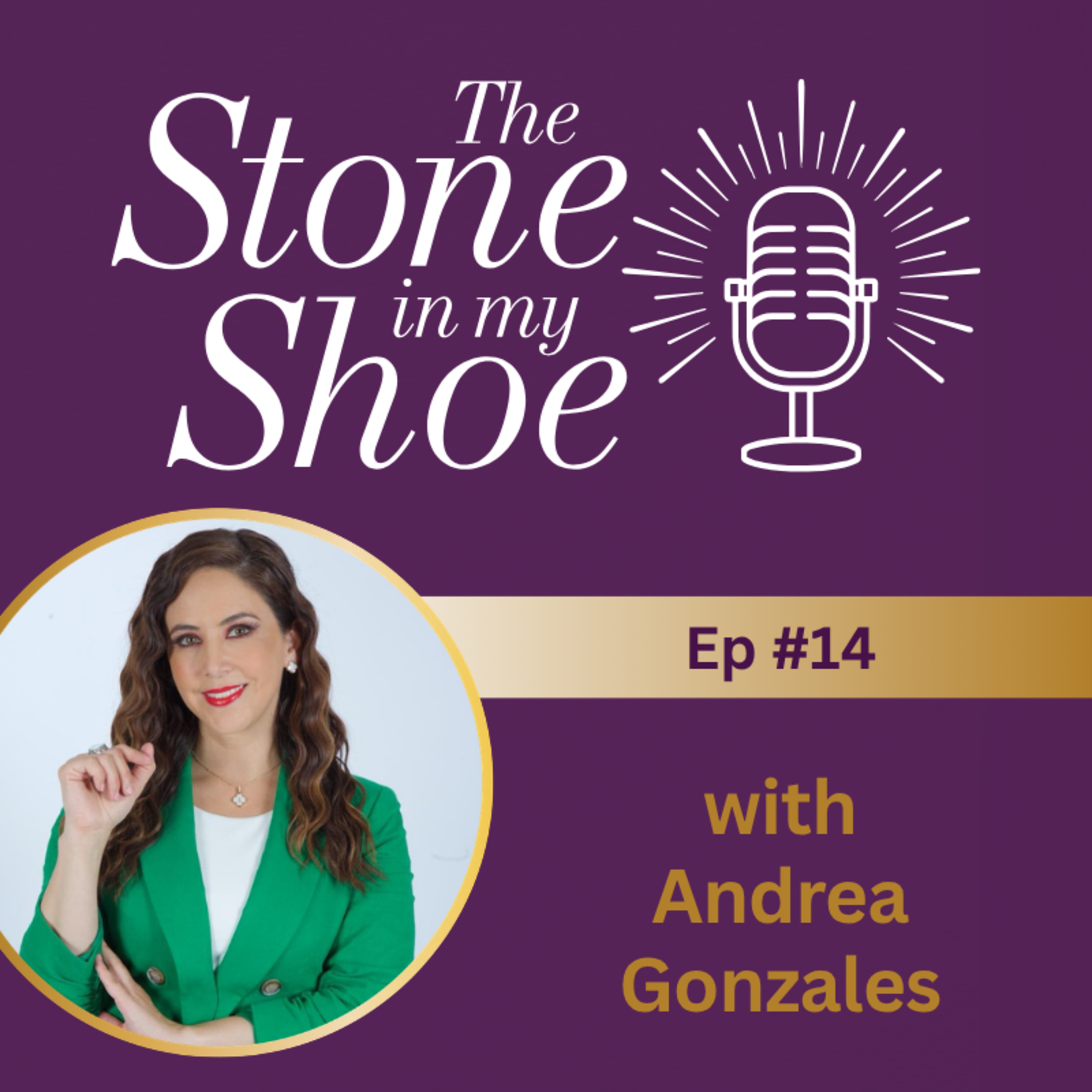
I Ignored Every Red Flag in a Toxic Relationship | Andrea Gonzales
Content note: this episode includes a discussion of domestic violence.
Listen to this episode
Chapters: tap one to jump to it
At 19, Andrea Gonzales ignored the feeling that something wasn’t right.
What began as a relationship that felt exciting and intense slowly became controlling, emotionally abusive, and eventually violent. In this deeply honest conversation, Andrea shares theexperience that changed the course of her life — including being kidnapped by her boyfriend after trying to end the relationship.
But this episode goes far beyond the story itself.
It explores the quiet ways women disconnect from their instincts, override their intuition, minimise red flags, and slowlylose themselves while trying to keep love, peace, or approval.
Andrea speaks openly about self-worth, emotional conditioning, toxic relationship dynamics, intuition, healing, andthe long journey back to trusting herself again.
This conversation is for women who:
- keep overriding what they feel
- struggle to trust their intuition
- people please to keep relationships safe
- feel disconnected from themselves
- have ignored red flags hoping things wouldchange
- are navigating identity shifts and emotionalexhaustion
In this episode, we explore:
· emotional abuse and coercive control
· trusting your gut instinct
· why women ignore red flags
· toxic relationship patterns
· self-worth and subconscious beliefs
· family conditioning and relationship dynamics
· healing after trauma
· learning to trust yourself again
· emotional survival and resilience
· breaking generational patterns
Some experiences change how you see relationships forever. Others change how you see yourself.
And sometimes healing begins the moment you finally stop abandoning what you already know inside.
Read the full transcript
Hi, this is Debbie Thompson and this is A Stone in My Shoe, the podcast where we explore the moments in life where something no longer feels quite right and what happens when we choose to listen. And today I'm delighted to be joined by Andrea Gonzales. She's an award-winning journalist, author and storyteller for Mexico City, who spent years working as a news anchor in Los Angeles. She's the author of Successful Latinos, a collection of interviews highlighting the stories of Latino women. And at 19 she experienced a defining moment, shaping her relationships, her sense of self and the direction of her work.
She's also a mother and a wife and has recently created a short film based on her own story. Her journey sits at the intersection of storytelling, lived experience and what it means to rebuild from within. So Andrea, welcome. Thank you so much, Debbie. Thank you for that beautiful introduction. It's such an honor to be here in your amazing podcast, This Stone in My Shoe, because I think all of us has a stone or a lot of stones, you know, so it's important to talk about this. Thank you so much. I know, I agree. All your audience feels Los Angeles California. Oh, that's amazing. So we've got Andrea all the way from LA in California and I'm in the desert in Australia.
So isn't it amazing how we can connect around the world? And it doesn't matter where in the world you are, the stones so often have got a similar background, a similar story, a similar, yeah, just some similarity. That's wonderful that we can all be so honest and share around the world. So Andrea, before we go into your story, I just want to frame this for the woman listening. When she finishes this podcast, what do you hope she understands differently about herself and what might she begin to notice after hearing your story? What I want to transmit or to communicate that it's really important to listen to our heart.
I know that it's a very common phrase, but it's really important to understand that if you are not feeling comfortable in any situation, it's important that you listen inside and to learn how to be out of that situation. I think that's my core message at this time. Beautiful. And what we'll do is we'll dig into that a little bit more listening to your heart because some people listening might not really understand what that feels like or looks like, or maybe they do, but they don't understand that's listening to the heart. So we'll go into that. So let's go to the stone in your shoe you'd like to talk about and just tell us a little
bit more about that. Okay. As you mentioned, when I was 19, I was starting my, I was living my, one of my biggest dreams to study communication, what is my major or my career. And that's, this is important because I always wanted to tell stories since I was a kid. And I just, when I knew that I decided that I wanted to study communication since I was 10. But that dream was interrupted when I was 19 and I was starting, I was at the beginning of my major of my careers, my career, my studies. And I knew a guy, which he was a student in the same university of the same career.
He was a producer in the local radio station of the, inside of the university. And I was really interested to be, to use my voice to be at a radio. So I met him and we started to have a friendship. And then we started to be, he started to be my boyfriend. And then the first month, everything was beautiful, exciting. He had that, this very vibrant personality. And I was really happy with that. But then everything changed. He started to be jealous. He started to ask a lot of things and he started to ban me or prohibit to me a lot
of things. And then I started short way. I had to say it was a short way because we were together only five months. But that five months were enough to became a domestic violence survivor at that age. And I wanted to say that I grew up in a very lovely family. I never saw any violence or the kind of things that I had on that relationship. But anyway, when I realized I was absolutely involved and suddenly five months after we
started the relationship, I tried to, to end the relationship. Because all my family and my friends were trying to, to make me realize that wasn't good. He was absolutely jealous. He was chasing me through the university. He was checking absolutely all my activities. You can see me, I like to be, I like to have makeup, to have my hair on style. And he started to say, why are you using that red lipstick? You can't use it. You can't comb your hair.
You I don't want you to see like that. So I started to say, okay, I won't use the red lipstick because he will get mad. And I don't want that. And I want problems. And then that yellows attitude started to become with bad words. And he started to treat me really bad. And suddenly the day that I tried to say, you know what, I can't continue with this. He say, okay, so we're going to talk. And I'm going to pick up you from your house and I'm going to take you to another place to talk. And I went with him.
But I didn't know that he were going to kidnap me. So I was kidnapped for maybe five or six hours inside of an apartment. And that was the moment that I think that is the start of in my shoe. He started to hit me, he started to kick me. He punched me in my eye really hard. And I was really, I think I got a little bit mad or crazy for an hour for a couple of hours because I just wanted to leave that apartment. I just wanted to be at home again, but I couldn't for many hours.
Yeah, that moment changed absolutely my vision and my relationship with other, with my future partners or significant other. Thank you, Andrea. Thank you for sharing that. That must be hard to go back there and relive that because you were 19. You were so young. You were just kind of first time leaving home. How old was he? He was 21. 21. Okay, so there's still a bit of a power imbalance and also he was a producer. And looking back, because at 19, coming from a home where you felt so safe so you never, you weren't somebody who had those, the wounds of being hypervigilant and looking out for
your safety, you came in trusting the world. And you met this guy and they very often are incredibly charismatic people and make you feel amazing initially. So that first month was amazing and you had feedback from your family and your friends. Can you go back and when did you first realize that something wasn't quite right? And when did your friends realize and can you just talk through that side of things and perhaps why you didn't listen? Yes, sure. When he started to ban me a lot of things, don't talk with them.
Don't talk with your friends. Don't talk with your family. Be a part of your family. You are 19. Now you can be independent. But the real message was you can only do what I say. Don't listen to anyone. And I knew that I was like betraying my tradition, my story, my family, my roots, but there was a point that I thought, okay, I'm alone on this, inside of this. I don't know how I'm going to be out of this, but I will do it by my own. So you knew in the beginning that there was something wrong, but you were going to, so
you knew like month one, like quite quickly that something was wrong. Back on month. Okay. But you want, but you wanted to do it on your own. Yes. Because I was thinking maybe it's not so bad. You will change, okay. And maybe I was thinking like, if I said, yeah, all of you were right. I will see, I will appear weak. So I wanted to be strong. I wanted to be like, no, I'm right. I'm absolutely right. I know why I am, but definitely I was wrong.
So looking back, one of the, when you started with trust your heart. That's the thing that the guiding light at this time, and you were only 19. Was your heart trying to tell you something that you then overrode? Absolutely, absolutely. And my heart knew it and my God knew it because I always say that the God never lies. Your God never lies. So if you feel here in your stomach, that is, it doesn't feel right anything. The way that he's talking to you, the way that, even if it's a boyfriend, husband, manager, whatever, friend. If it doesn't feel right here, the stomach, yeah.
So that's interesting, but it was at 19, we have egos, don't we? I think that we can do everything. We don't have the experience and the wisdom that we do when we're later on. So you overwrote that I can fix him. I can change. It's not that bad. I don't want to be wrong. He's really charming. He's got all these amazing things. So you overwrote your heart. And as the months went on, because this was month two, you realize, you must have done that more and more as you got more and more jealous, more and more controlling. Exactly. As I said, no, I can't do this by my own. I can't do this by my own. I don't need help from anyone. So he was controlling and more and more. I always say that nobody become a domestic violence survivor from day to night because
you start to, I think, another thing, bad words, don't do this, don't do that. Then suddenly when you see you are inside of an apartment being hidden for other person. Before that day, I remember that it was, it was 1999. I was 19. And at that time, the cell phones didn't have internet. So I had to go to a special room, the cyber room at my college to check my email. But he prohibited to me to see my email because he used to say that if I check my email by
my own, maybe I would, maybe I can be writing with the other man. So I went, I thought that he didn't realize that I was checking my email. And suddenly I felt something here in my back and he asked me, what are you doing? And I felt paralyzed. I really got freeze. He started to, he stole my password. He said, you'll never check your, your own, I have to do it for you. And he started, he took a pen.
He took a pen and he started to hit me in my neck, in my leg. And that day started the physical violence. So it's almost like they try the little things first, the jealousy, not too bad. Okay. She tolerates that. Cool. And then she puts everything on and just keep layering and layering until one day you don't tolerate. And then they get angry. So this time when he was hitting you with the, poking you with a pen, was this before the kidnapping? Yeah. Okay. That was. Okay. So when you said yes to go with him to talk, was there, was your gut and your heart saying, do not go, this is dangerous? Because you'd had some exposure to the fact that he could be violent.
Exactly. For sure. But I was innocent. I always say that he didn't have enough emotional tools that I've had now to prevent that situation. What I thought at that moment was, this, this will be the end. And I can do it right. So if he's asking me to go and talk, okay, I'll go, but it will end. Yeah. It was like, it'd be my innocence. I don't know. Well, Teen, you're so young, right? So young. And these people are so manipulative. So sorry to take you back there, but back to the point where you were kidnapped. And you said that you must have been absolutely terrified, fearing for your life.
And at that point, it was like a before and after moment, how everything changed in your relationships, the way you looked at the world. Can you talk me through that a bit? Oh, you mean after? Yeah. Well, number one. How did you get out of that situation? And that was a defining moment for you. So then how did the world change for you after that moment? Okay. As I said, after five or six hours inside of that apartment, that also one important details that the apartment didn't have any light. So it was absolutely dark. And I was begging him to please take me home. Please take me home.
He was, no, I'm not going to take you home. But suddenly, and it's a very, I started that it's a very marked pattern of the aggressive people. He started to cry. He started to say, please forgive me. I'm not going to do it again. I can't be with you without you. Sorry. And then as a short film, I took advantage of that of that weak moment. And I said, okay, we can talk. Yeah. We can be together. We can still be together. But please take me home right now. I need to go home.
I said, okay, okay, I'm going to take you home. But please, I will see you tomorrow. I need to talk to you tomorrow. And I said, yes, okay, we'll do it. So where do you think that came from? Because you were only 19 and you said it's a pattern that they do. They often cry and ask for forgiveness. Yeah. Where do you think that that came from to just take advantage of it? Because you had no prior experience. Exactly. My instinct. My instinct. I think it was only my instinct to say, I really need to be out of here. Because if not, maybe he can kill me. But do you know what? That wasn't the worst part.
The worst part, when my eye was absolutely black and purple, and it was swallow. And I definitely need medical assistance. And I had to say to my mom. We had an accident. We had a car accident. And oh my God, I wanted to protect him. And then my mom was crying and I think was the worst moment. But my brother saw me and immediately said, that's a lie.
You didn't have a car accident. This guy hit you. And that was the moment that I said, I can't lie anymore. This is my family. They love me. They will never hit me as him. And that was the moment when my brother told me, you can't talk with him again. Never. You have to go to the people of the university and you have to tell these to your teachers. Because if not, if you stay saying nothing, he will do it again. And that was the moment when I say, that's right.
I don't need to leave this. Why? But now, 26 years before, I know that when you are absolutely involved in a toxic relationship, you can't see the logical things that you see when you are outside. And my brother was like an angel. He was the key that I needed to change that story. Because if not, maybe I would talk with him again and forgive him again.
And I don't know what would be at the end. And it's almost like having a champion, somebody who you really trust, who loves you, who has the best interests and can almost be your protector in some ways. Is that kind of what your brother was to you at that time? Absolutely. Because this is interesting because all my friends, including my parents, all the people were trying to tell me this is not right. All of them were judging me at the same time. And my brother wasn't judging me.
He was just telling me, you know what? I want you to see it happy again. I want you to see doing things for yourself again because you are not doing things for yourself anymore. And what I see is that you are always, now you are always worried. You are sad. You are just calling him or receiving calls from him. But I want you to see yourself again. And that was the wake-up call. So it's almost shining a light on the situation as it is. Without the judgment, without any of the emotional attachment, this is what is happening.
And I guess also by you seeing that this is how it's affecting my life and this is how my life could be different without the judgment, shine a light to go, yeah. And I suppose as well, having somebody like your brother who's strong and he calls it as it is and he's got your back, you almost can relax and let him take some of it and be the protector. So you're not this hyper-vigilant person. Somebody else takes a bit of the burden. Would you say that's how you felt? Your brother taking a bit of the burden, this whole burden from you. So you're not carrying this by yourself. Exactly.
Because he's someone very peaceful, very balanced. And that helped me a lot because I was inside of a twister and I was absolutely numb. And he gave me the light and he was so calm. He was, he took me with a lot of clarity, clarity, clarity. And then helped me a lot because he wasn't judging me and that it was really important to say, okay, I feel safe. I can't say how I'm feeling right now without, oh, I told you, I knew it.
You should do something before all that regret. I think, yeah, I think judgment's a really hard one, isn't it? And often what happens is you kind of go the opposite way because judgment is, it's a really hard one. You need compassion and love and support, not judgment. So you had the support from your brother and did you manage to sever that relationship? Did he stay away from you? Yes, but the days after he tried to chase me, he tried to call me. And thankfully I had the final support to say, no, I won't pick up the call anymore. I won't talk to you anymore. And you know what? I'm gonna love to do it.
And yeah, so I started to talk about this with authorities inside of the university. And dad was the only way to end that toxic relationship. But it was a long process. Inside and outside. Oh, absolutely. Interesting outside as well, because telling the authorities, you would have thought at a university, they would step in quite quickly, but obviously that didn't happen. So at least you had that support. So you're a 19-year-old girl. You've gone through something that no one should go through, but so many people do. But you're so vulnerable, you're so young. How did that change how you saw the world? Because you said that was a defining moment in your life, how you saw relationships differently,
your work changed, everything. Can you talk me through that? Sure. After that, and I started to heal or tried to heal myself, heal inside. One of the things that I absolutely understood with that experience was that I will never be in that situation again. But that will depend on me. It wasn't easy because I had another relationship, not with that level of violence, not with physical violence, but with another toxic situations, dependence, co-dependence.
But I knew that I put the limits and I have to do it always with everything. I can tell you that it's something that I just am to learn and start to practice school a few years ago. Okay. So prior to that, so 19, you then had some other relationships that were not quite as toxic, but still there was controlling and jealousy and stuff. But you're saying you didn't put the controls on early enough with those as well. Is that what you're saying? Not exactly because thank God I never had that kind of jealousy.
But I think that I started to want to be like a rescue person. So I started to rescue one guy and another guy. No. So you were attracting guys who had some kind of insecurity, some kind of vulnerability, and you were trying to rescue them, save them, turn them around. And how did that work out for you? Sometimes good, sometimes not good. But I think that I'm getting better and getting better and getting better. So now I say, okay, I'm not going to rescue you.
I hear to be your partner. I hear to support you, obviously, but not to be like your mom. Yeah. But I never had that kind of relation or that kind of guy. Because I said, never again. Nobody want, and now I want, allow anyone to hand or punch me again, never. And Andrea, what did you do because you were 19, what did you do to learn these lessons? What self, what work did you do to get over this trauma, to work through it, to understand yourself and to learn these lessons that you needed to learn? Was it external? Take me through that process.
Obviously, I went to therapy and that helped me a lot to understand or understood what really happened inside me, not with him because the important thing is why I ended on that situation. So obviously, with psychological therapy, but also reading a lot about, I'm not exactly a religious person, but I believe a lot in energy. And I always try to follow myself by instinct and energy. So the way that I try to heal myself and to heal my relationships was feeling the
energy, feeling my God and repeating that nothing has the right to stole my peace, my interior peace. And I think that is a very good principle for life because sometimes there are a lot of things that are stolen our interior peace and we are not realizing about that. So it's important to detect all that elements that are surrounding you and stolen your peace is stolen your sleep. So that work from going to therapy and working out, what did you learn about yourself in
the early stages just after 19 that you went, oh my gosh, that's so wise that so much wisdom. I'm going to take that with me. Some of the things you learned, I think I learned that I needed to work very hard on myself's team, self esteem, yep, yep, myself's team wasn't right at that age. And I was very insecure. I'm always being very extroverted, extroverted, but inside of me. I learned why I was attracting that kind of guys, because maybe inside of my heart, I didn't
think that I deserved that love. And that's absolutely important to recognize that you deserve the love, but if inside of your heart, inside of your God, you don't realize that you are feeling that you don't deserve that you don't deserve one who admires you, who respects you, who loves you, no matter what, you will still finding that kind of guys that are less or not valuable. And that's such a common thing of not feeling enough, not feeling good enough, not feeling
deserving. And it's such a common thing with so many women I've spoken to. And so you tolerate things, you people, please, you show up in a way that's not authentically you to still be loved. It's almost like earning that love rather than being somebody who just deserves that love, who attracts that love. And you just you disconnect, as you said, from your own instincts to to override this, to keep the relationship, to keep the love, the love, I should say, the love. Yeah. And I think this is some of the most biggest lessons that I learned that and this is important. This feeling that you don't deserve love is not conscious.
So this is really important because people say, oh, no, why? I obviously I deserve the best, but inside in the subconscious, it's not the same thing. So that's why therapy is necessary for everyone because it helps you to get out the layers and find the core or find the, whatever, the pearl. So do you think the core for you would you say is I didn't deserve to be loved? What was the core for you under all these layers that you unpacked over the years doing everything that you did? I think that even I, as I said, I grew up in a very lovely family.
My dad was like an old school dad. And my mom was an old school mom. So I always saw this, this relation that my dad always had the last word and my mom was always saying, okay, it's okay, no problem. So now what I realized that is that my mom was really sweet, was really very comprehensive, very empathic with everything. And she always got stayed quiet about her feelings. It's because it's not safe to have your and not talking in your household. But so often it's a it's about safety and love.
And in most people's houses in two different degrees, I was the same having a big voice was not safe. And so I learned that at the age of five and took that through for the rest of my life. And you're right, it's subconscious and it happens early on, depending on different stages. But and then it stays with you because it kept you safe at that point. But it no longer serves you. It's seeing that and unraveling it, isn't it? Exactly. Exactly. But the thing is that when you see that it was another generation. I understand perfectly my parents. And I try to, yeah, to understand the way that we were educated or whatever. But it was another generation and you grew up saying it's watching that and learning
that and it's really inside of you. It's not so obvious. So a thing happened in my case was that I saw a mom was that that was always quiet, okay, doing whatever my dad said. And maybe that inside of me was like, okay, I don't deserve another thing. But it was subconscious. Yeah. That's the thing is, oh, I know. Yeah. That's the thing is so many people don't understand what's driving the show. The subconscious is in control of 95%. We think we're in charge with our 5% thinking mind, but it's not.
It's the feelings. It's the the core wounds that we're holding on to the stories that we're telling ourselves. And it's not something you can think into. You have to feel into it because your subconscious is the feeling part. And trying to do it in your head is ever, as you said, it's going into your heart. Seeing your gut, how you really feel being honest, radically honest with yourself, seeing all parts of yourself, the parts that you like, the parts that you don't like so much. But it's being really radically honest and seeing them for what they are with no judgment, with compassion, compassion and love because that part of you once served you. It was useful, but it can be reassigned. And I think it's a big and it's an amazing journey.
But it's the sad thing is often you need a stone in your shoe. Your stone was horrendous at 19, but it was that started this process. And what I'm trying to say to these other women is, don't wait for that stone to cut you. If something feels off, even slightly off, go and find out, find out who you are, what's behind it so that you don't go down the spiral till you have your voice, right? Exactly. And that's what I learned that I need to break this invisible tradition because there are like legacies in families. And I think one of the bravest things that you can do in your life is to break that invisible legacies, that they are absolutely inside of us.
Each one has their own story, their family story, but it could be really heavy if you don't cut at a time or you don't learn how to break that glass or, I don't know. Yeah, to break that chains. It's important, as you said, with not judgment, but learning, OK, I saw this in house. I don't want to repeat it. How can I do it? And the other thing that I learned is that is there something that you don't like in relationships, for example, violence. And I'm not talking only physical violence, verbal, which is most common.
You have to put the limit, the boundaries, because violent people will never end. Violent people will never end. And this is very obvious. We are seeing violent people everywhere, all around the world. But you can put the limits, you can put the boundaries and say, you know what? I'm not going to allow you to talk me like that. I'm not going to allow you to hit me or to mock at me. And it's important to recognize if there's something that is not your view good, put the limit, talk about it.
And if you are if you are leaving violence in any kind of violence at this moment, you should ask for help, ask for help. Don't try to do it by your own. It's important to have a support to take out of violence. Yeah, that's I think that's really important to going back to what you said when you were 19 and I want to do this by myself. And there is a part of us that has this. I want to do it by myself. But without your brother there, it could have been a different situation. Right? You needed that help because I guess sometimes you're you can't see what's going on and also you don't have the skills or the self confidence.
I don't deserve this. So you almost need somebody or whoever's helping you to be that part of you while you don't believe it at that time to to give you that belief so that you can say, I'm not tolerating this. Except amazing, amazing. So I have a voice. Sorry to have that little voice in your ear saying, hey, this is not good for you. And for you to know that nobody cares. Your own safety more than you. And when I say safety is not all the physical, as I said, your inner peace and all your human being have to be safe.
And nobody cares more than you. But you've got to be reminded that you deserve it, right? Because sometimes you lose that. So, Andrea, thank you so much just for the woman listening who feels something is not quite right, maybe in a relationship. But you can't fully name it. She just feels something. What would you leave her with? If you don't recognize it, if you don't listen to that, that's what you want to ask. That it's more like if somebody listening to this is in a relationship, perhaps, and they just feel something's not quite right. They can't name it, though. They don't really understand what it is.
They just have this little niggle, but they don't really understand it because often it's so subconscious you don't understand it. What would you say to her? Very important word that you say. Be honest. You have to be honest and say, OK, nobody's listening. It's just, for example, Andrea's brain and Andrea. Are you happy with this? Really? Tell me. Are you happy with this? No, I'm not happy with this. OK. But I don't want to end the relationship. OK, you have to talk. You have to talk. And you have to say to the other person or with your boss or whatever,
I don't like this. It's important to first talk with yourself and then talk with the person or with the other person that you that you know that is a person that you can help you. Yeah, yeah, yeah. And if it's something that is really concern or really stealing your inner peace, you need to talk with a professional. Go to therapy because you will find the answers with no judgment and in a professional way. And it would be very helpful.
But sometimes there are people that do not trust on therapy and tell, why are you going to that? It is not working. If you feel that it works, do it. Yeah. And so many other modalities as well. So many people are using somatic stuff in their bodies, breath work and all sorts of things. You're right. And it might be that therapies, it's just the wrong therapist. Don't just give up. Don't throw the baby out with the bathwater. Find something because there will be something that shifts it, whatever it is. Some people I've spoken to had tried five or six things before anything worked. And that's okay. But keep at it because there will be something that shifts this. So is there anything else you would like to say before we finish the conversation?
Just to end this concept that is very important to survive is that if you think there's a little thing, but you don't talk about this, it will get not a little, a bigger thing. And there will be some point that it will be like, you don't have another option to talk about this because if not, the body, as you said, the body speaks what the mouth doesn't speak. So I think my message to this conversation, Debbie, is listen to your heart or listen to your gut and do something about because it's your responsibility. If you don't feel right with whatever thing, it's your responsibility to feel right
and do whatever you need to do, but do something. I love that. It's your responsibility. And also what you said there is if you don't do it early on, the monster gets bigger and bigger to a point where you can't do anything. So it needs to be not the first time, not the first of, oh, maybe they were tired, explaining it away as soon as it happens to bring it up. Exactly. But Jimmy, open your eyes, open your ears and to become about your body, about your mind, about your soul, about your inner. So actually it's all about getting to know ourselves without the stone. The magic is the inside job.
The magic is before any of this happens to understand who we are, what, all the, you talked about the generational. I don't know what word you used, but it was such a beautiful word. This generational, not trauma, you didn't call it that, but that we carry. And it's our job to find out what it is because it's individual for everybody. And it's our responsibility to be radically honest. Find out what it is for us. And then do the work. Take the responsibility. Be responsible for yourself because that's it. Nobody cares more than you. So you have to be responsible. It's important not just to be a victim or just to cry or just to do, to say I don't want, I don't know how to solve this.
Be responsible and find what do you need to do to feel better? Whatever, but do it. Beautiful, beautiful. I love it. I love it. So, Andrea, thank you so much for your time today. Thank you for being so vulnerable and so open and going back there. That must have been very difficult for you. And I really appreciate you being on here. Thank you. Thank you, Debbie, to be, for being so sweet and so comprehensive. And thank you probably for my story and to share it with your audience. It's a pleasure. So, as you're finishing listening today, just notice what stayed with you. Maybe there was a thought, a feeling, something that you recognized in Andrea's story,
but you haven't said out loud yet. And maybe, just maybe, don't ignore that. Thank you for listening.
Want to know what your Stone could be?
Take the free reflection